Production
From garden to container
Six controlled steps, documented per batch. Every lot is cupped against retained reference samples and screened for residues before it is released.
In our workshop
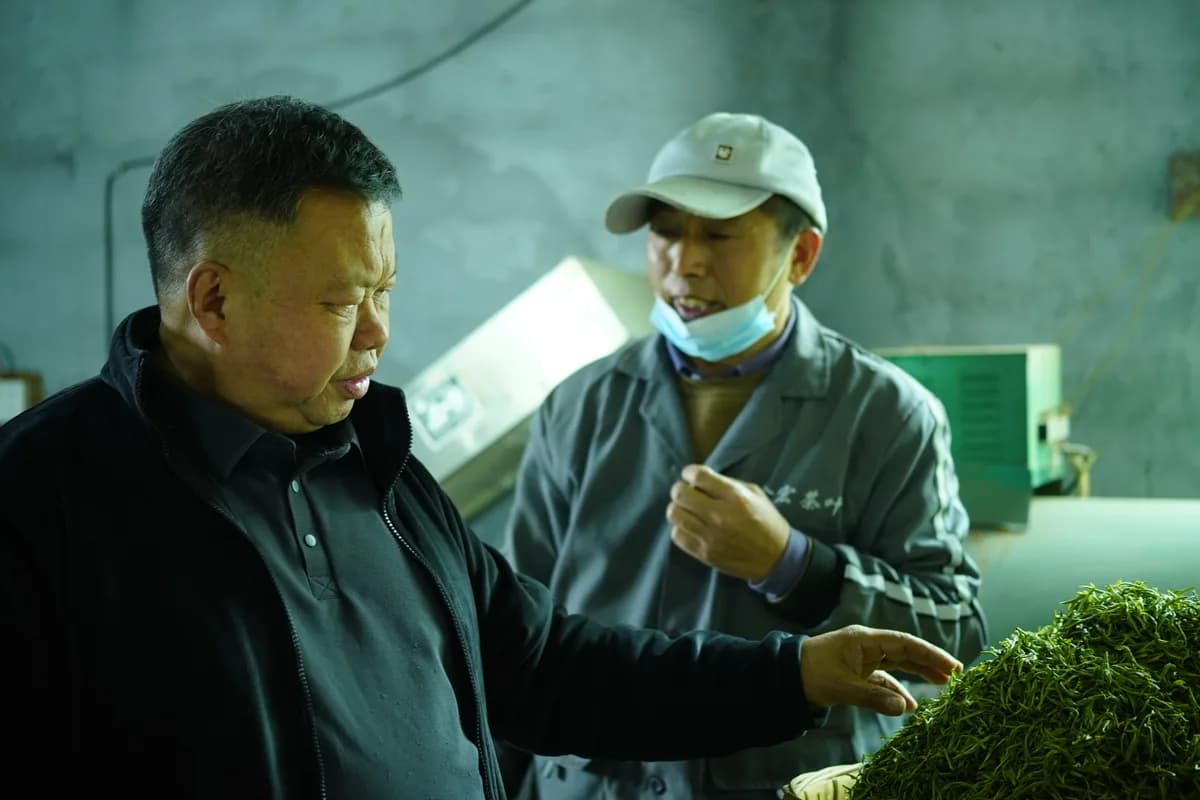
Process steps
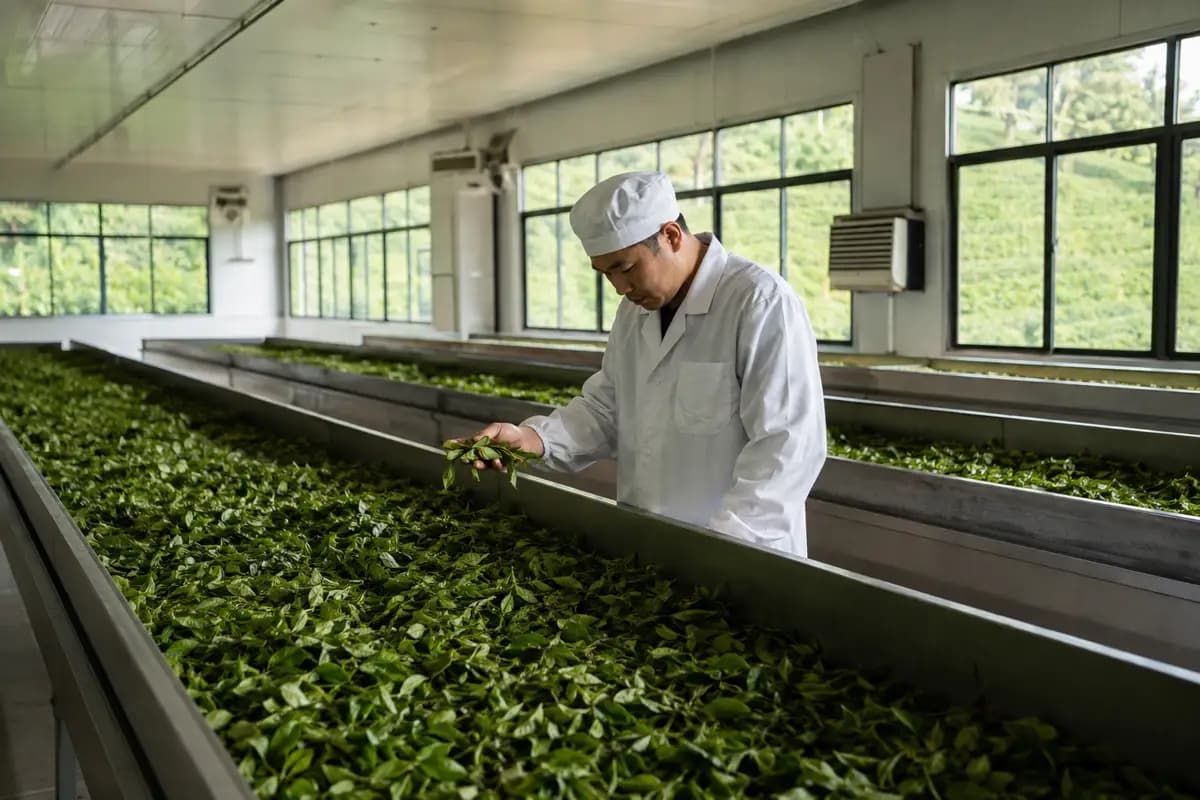
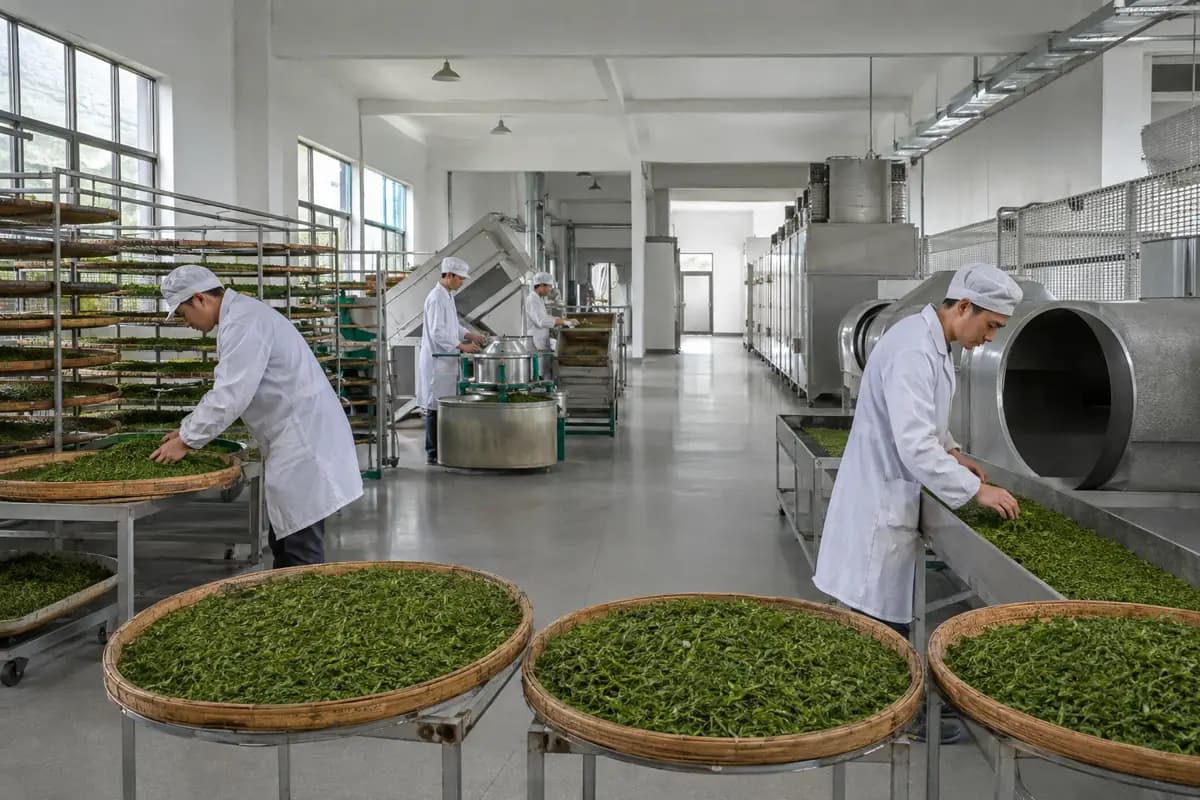
Withering 萎凋
Fresh leaf is spread on trays for 12–16 hours to reduce moisture and make the leaf pliable enough to roll without tearing. Humidity and airflow are controlled; over-withering costs aroma, under-withering costs the roll.
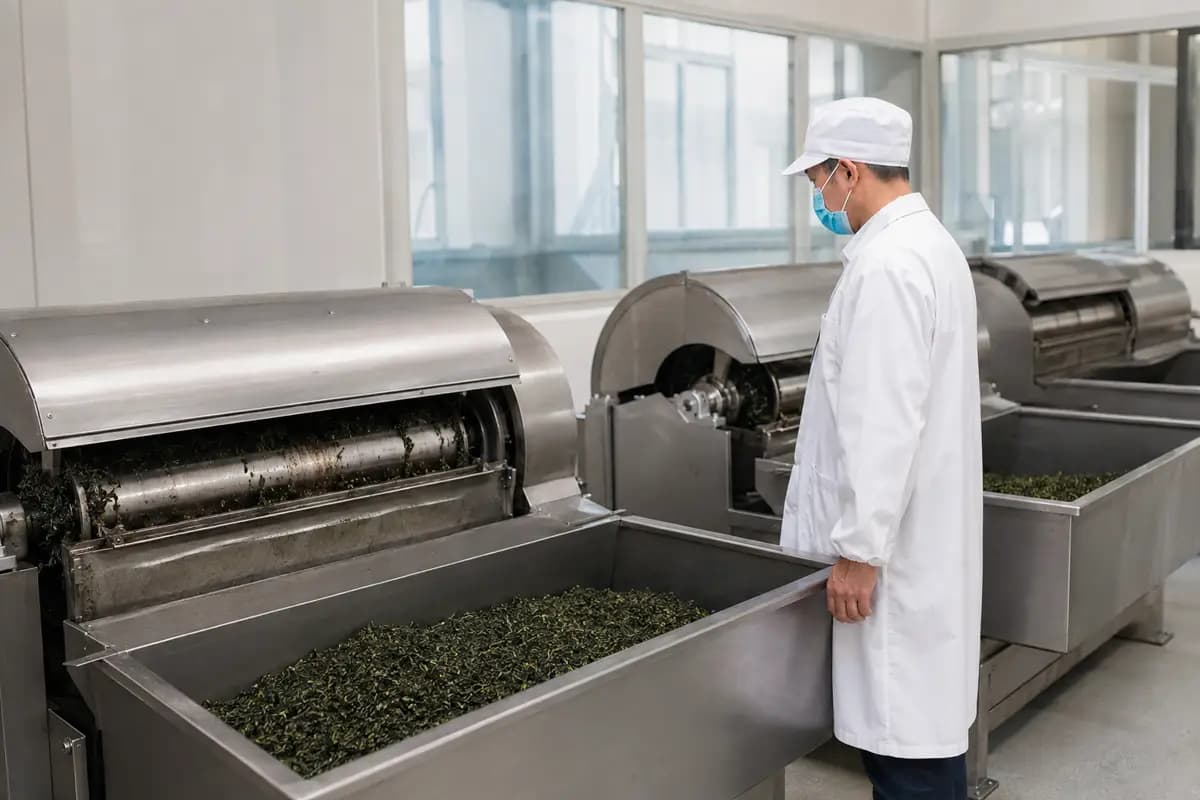
Rolling 揉捻
The withered leaf is rolled in three stages of increasing pressure. Rolling ruptures the cell walls, releasing the enzymes and substrates that drive oxidation, and gives the finished leaf its twist.
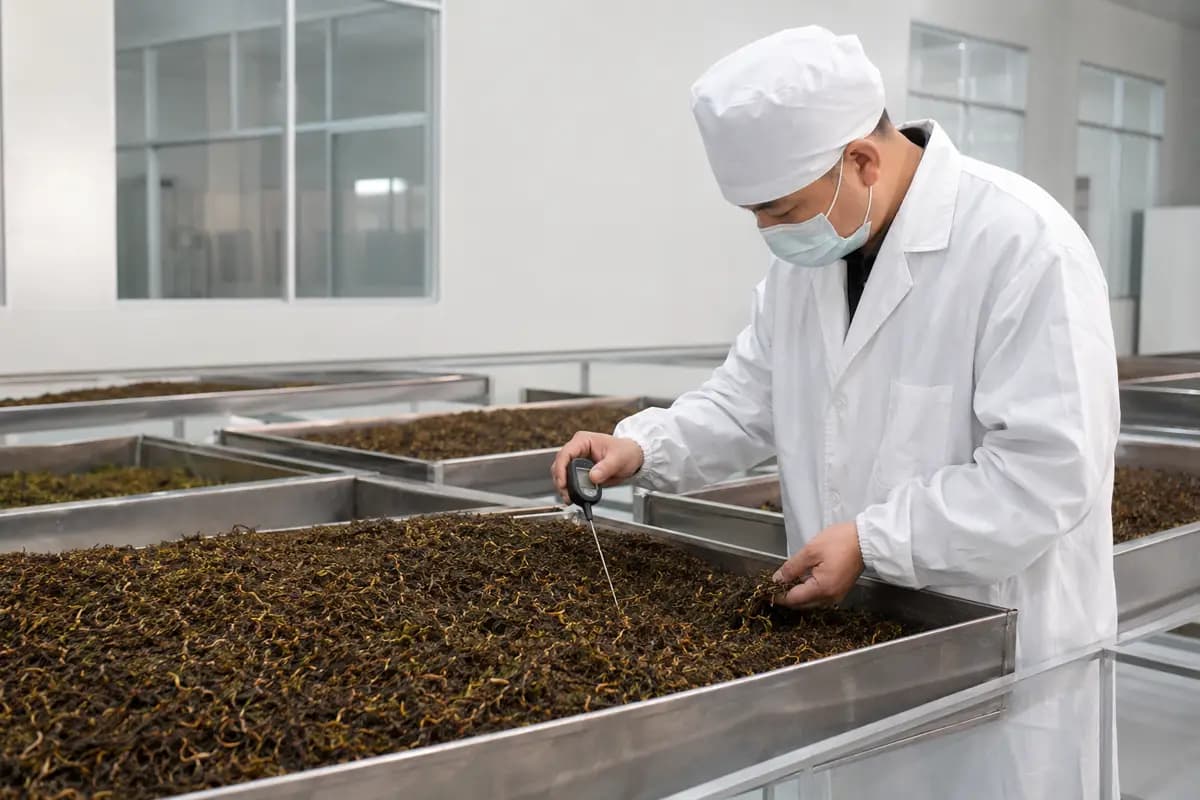
Oxidation 发酵
The rolled leaf rests in a humidity- and temperature-controlled room. This is the step that makes black tea black: polyphenols convert to theaflavins and thearubigins, and the leaf turns from green to copper. Timing is judged by aroma and colour, not by clock alone.
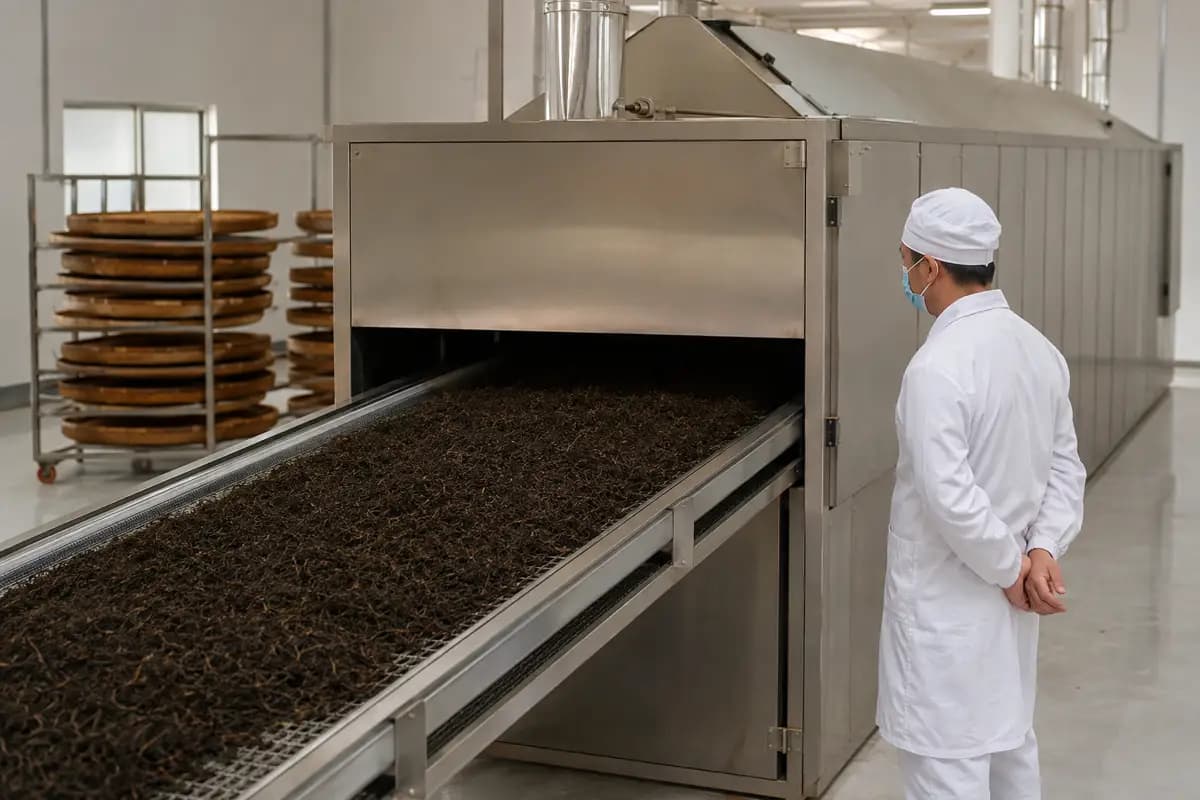
Drying 干燥
Hot-air drying halts oxidation at the chosen point and brings moisture down to a storable level. Done too fast the leaf case-hardens; done too slow the profile drifts.
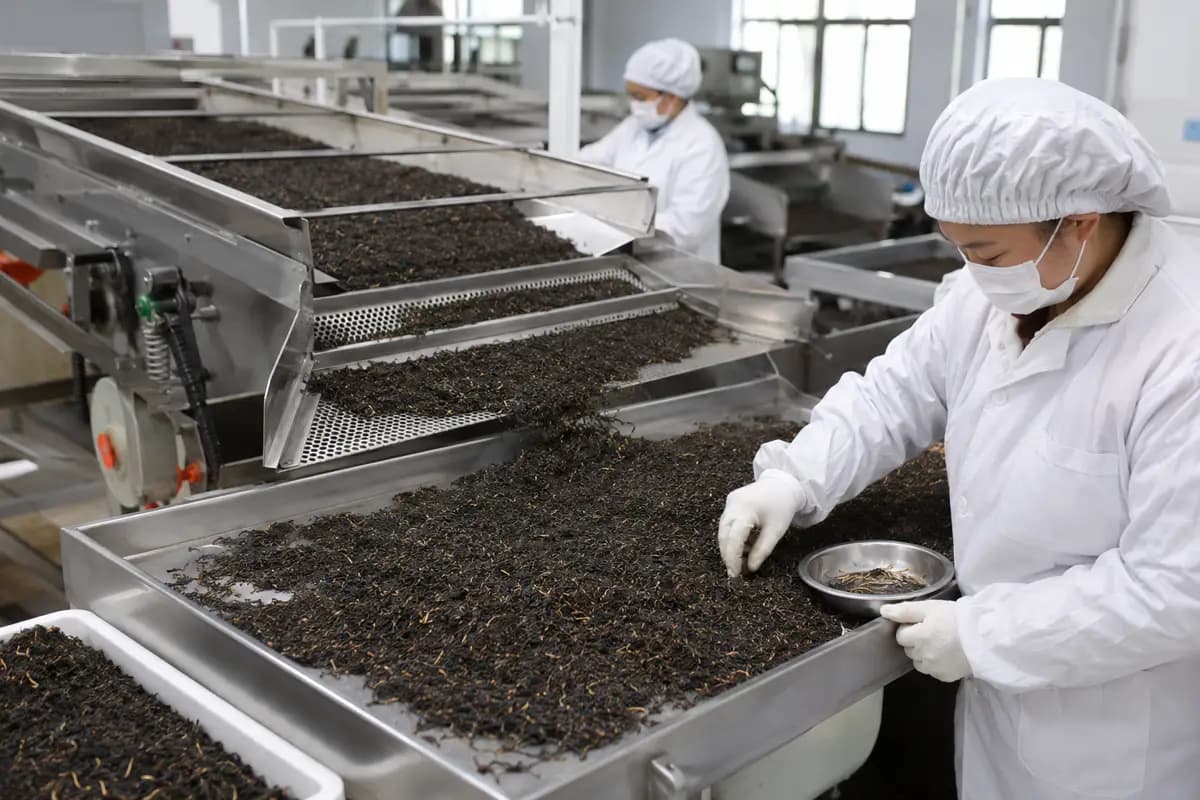
Sorting & refiring 精制筛分
The dried tea is screened by size, winnowed to remove fibre and stem, and refired to final moisture. Grade separation happens here — Imperial, Premium, Commercial and teabag cut all come off the same sorting line.
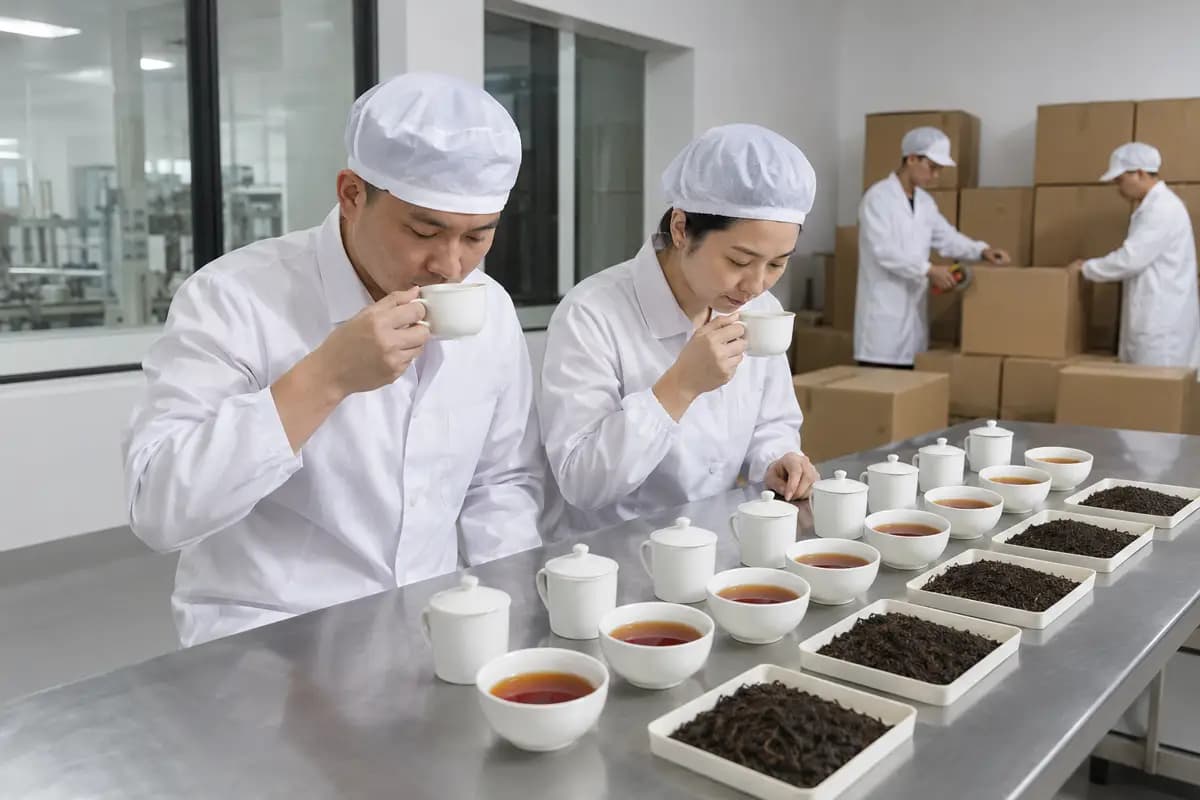
Quality control & packing 审评与包装
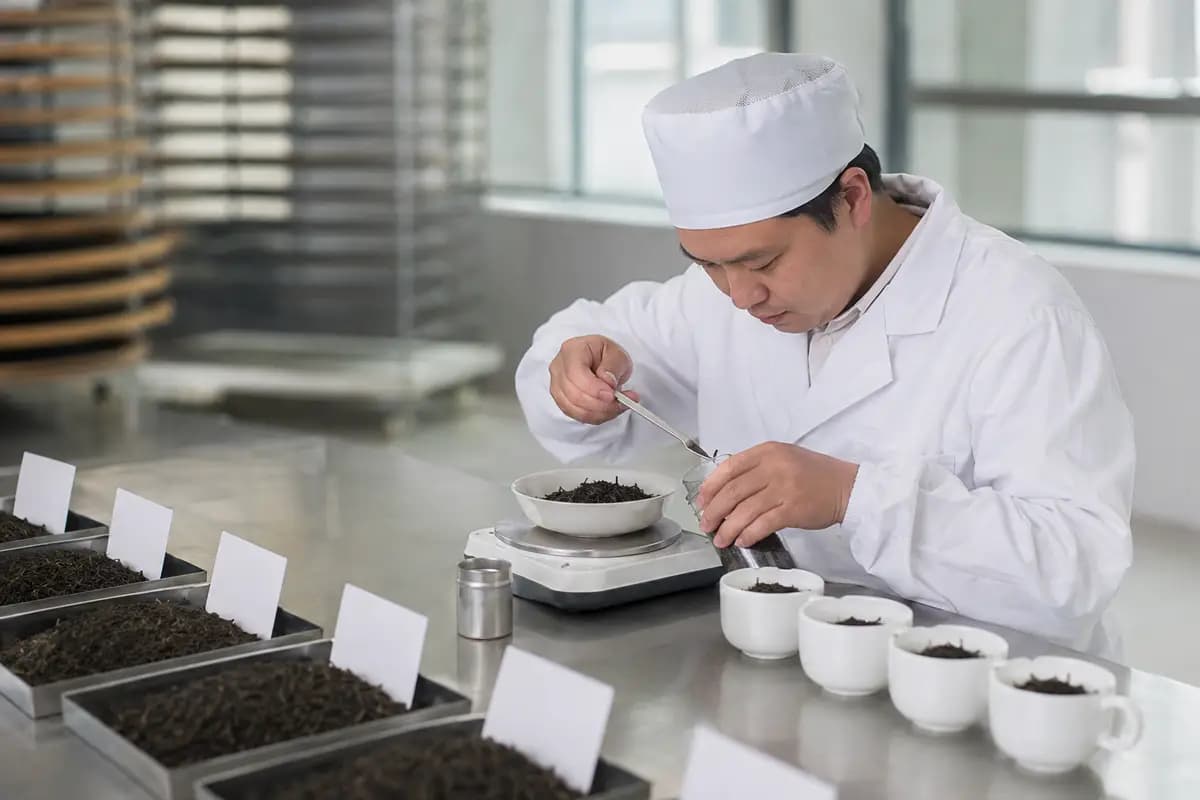
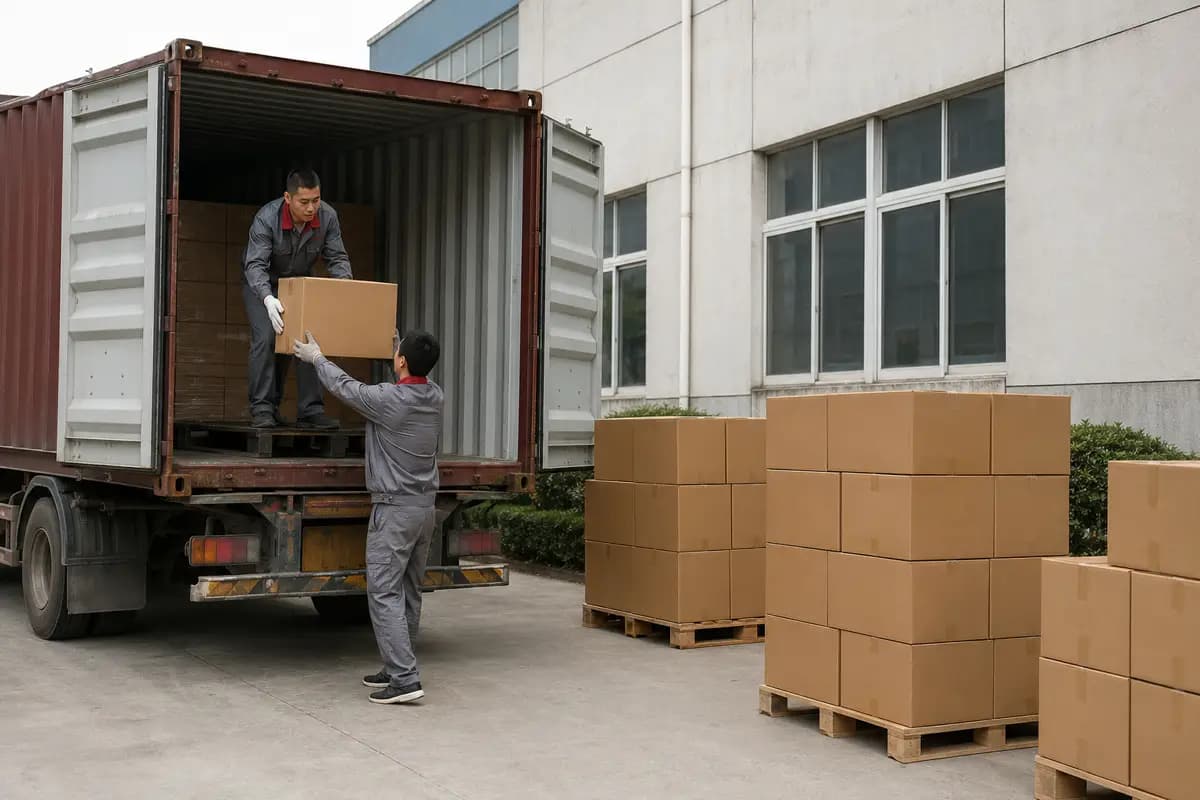
Every batch is cupped against retained reference samples and sampled for residue analysis. Cleared batches are packed into foil-lined cartons with lot number and production date, then palletised.
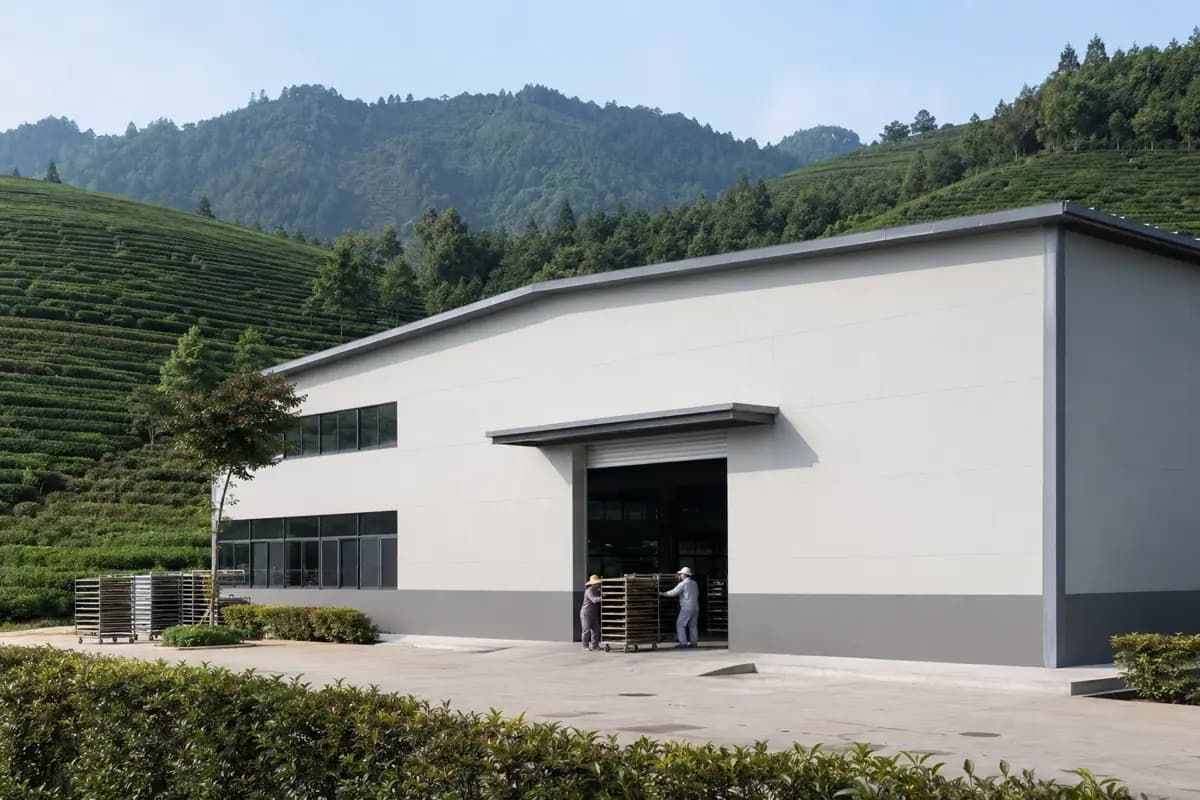
The facility

Capabilities
- Orthodox gongfu black tea line
- Withering, rolling, oxidation, drying, sorting, refiring
- Pan-fired green tea line
- Pre-Qingming and commercial grades
- Custom packing
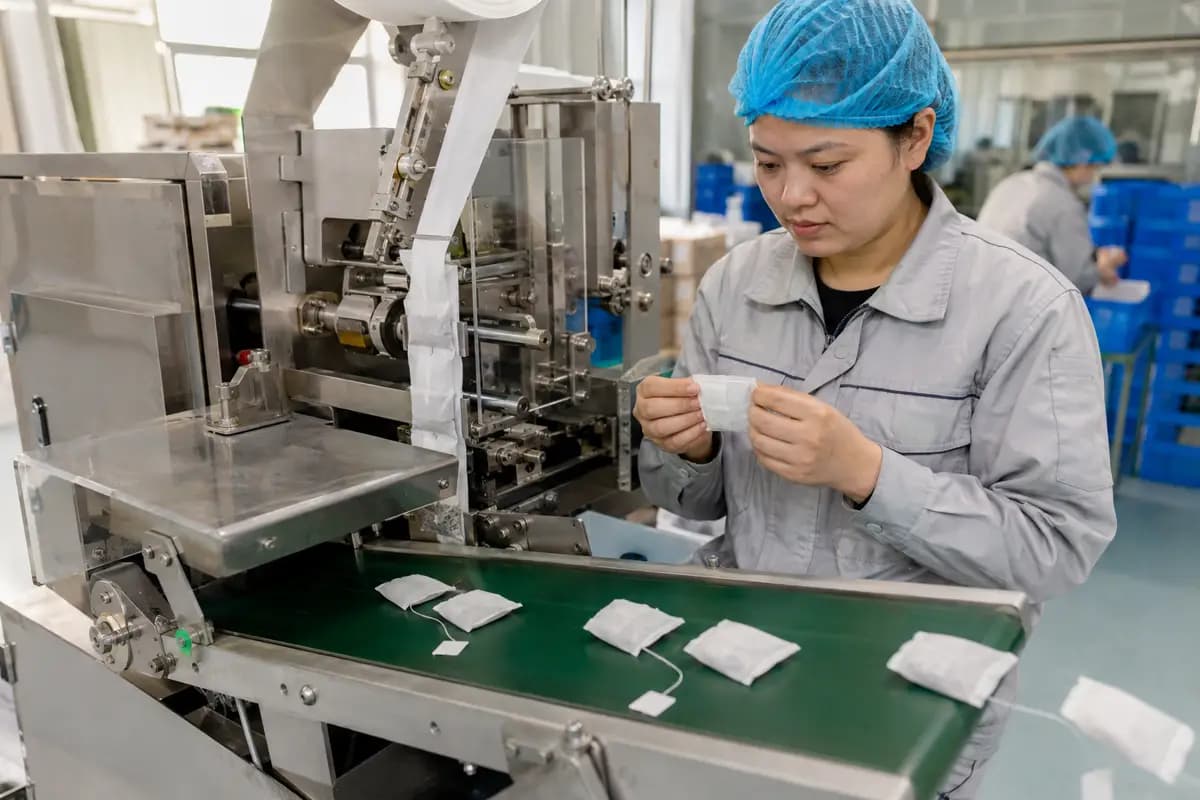
- Sachets, pyramid bags, foil packs, retail pouches, tins, gift boxes
- Instant powder & extract
- Contract-manufactured at partner extraction facility
- Personal care
- Contract-manufactured at partner cosmetics facility
- Quality control
- Batch cupping against retained references; multi-residue screening before shipment