Kreis Jishou · Xiangxi · Hunan
Eine Unze Gold für eine Unze Tee
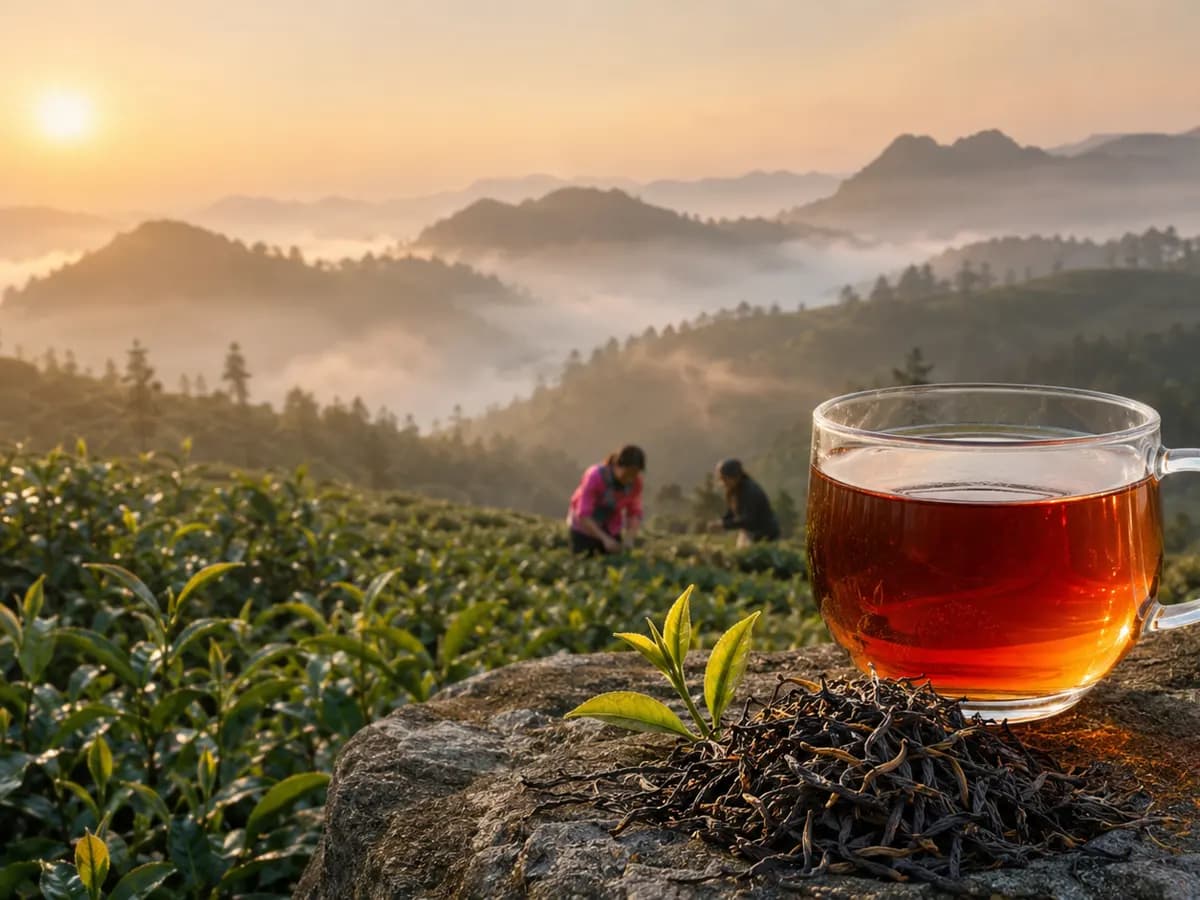
Schwarz- und Grüntee einer einzigen Herkunft aus Jishou, Hunan — eine in China eingetragene geografische Angabe mit einem veröffentlichten Aminosäuregehalt von 7,8 %, rund doppelt so hoch wie bei vergleichbaren Sorten. Wir binden die gesamte Jahresernte der Gärten, aus denen wir beziehen — jede Partie ist damit auf Parzelle und Pflücktag rückverfolgbar.
Die Herkunft in Zahlen
- Years of documented history
- 2,245Years of documented history
- Amino acid content, published figure
- 7.8%Amino acid content, published figure
- Chinese GI certification mark
- 15887938Chinese GI certification mark
- Mu of certified origin plantation
- 150,000Mu of certified origin plantation
Terroir & ecology
Nebel, Höhenlage und ein Berg, der über den Tee entscheidet
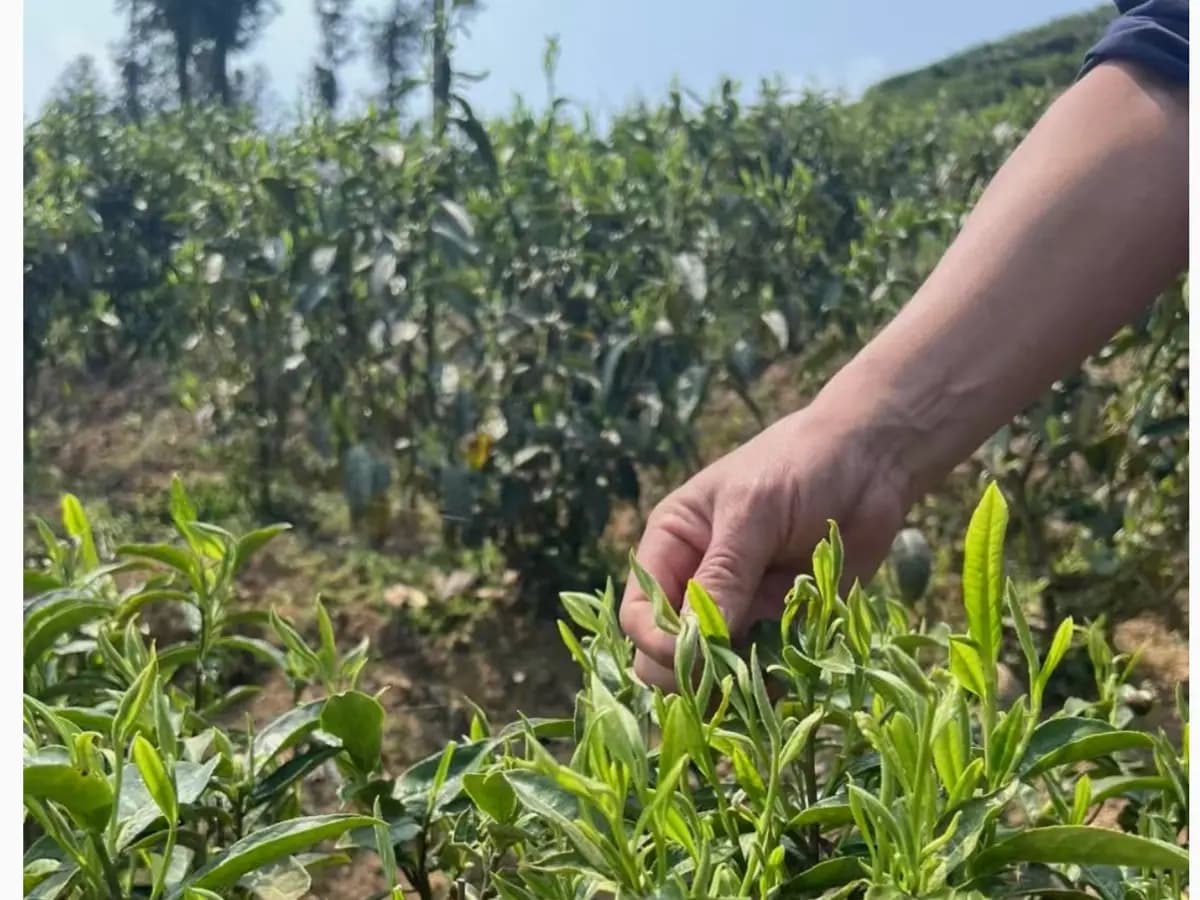
Die Gärten liegen zwischen 500 und 800 Metern im Wuling-Gebirge, an Hängen, die einen Großteil des Frühjahrs in Wolken liegen. Dieser Nebel ist keine Kulisse: diffuses Licht verlangsamt das Blatt so weit, dass es jene Aminosäurekonzentration aufbaut, für die diese Herkunft bekannt ist.
- Altitude
- 500 – 800 m
- Range
- Wuling mountains
- Growing environment
- Persistent cloud and fog
- Diurnal range
- Wide
Since the Qin
Eine Unze Gold, 1539 aktenkundig
Eine lange belegte Geschichte und so gut wie keine Exporthistorie. Dieser Tee wurde nie für einen Markt gemacht — er ist schlicht das, was diese Berge hervorbringen, und erst jetzt verlässt er sie.
Geographical Indication
Ein geschützter Name, kein Werbeversprechen
Xiangxi Golden Tea ist in China als Gewährleistungsmarke für geografische Angaben geschützt, Registernummer 15887938, gehalten im Auftrag der Bezirksregierung und im Widerspruchsverfahren vom Hohen Volksgericht Peking bestätigt. Der Name ist Tee vorbehalten, der in den acht Kreisen und kreisfreien Städten von Xiangxi angebaut und verarbeitet wird — mit Jishou als Kernanbaugebiet.
Unser Lieferprogramm
Fünf Linien, eine Herkunft
Loser Schwarztee ist unser Kerngeschäft. Grüntee, Konfektionierung, Instant-Pulver und Eigenmarken-Körperpflege erweitern dieselbe Rohstoffbasis in angrenzende Kategorien.
Black Tea
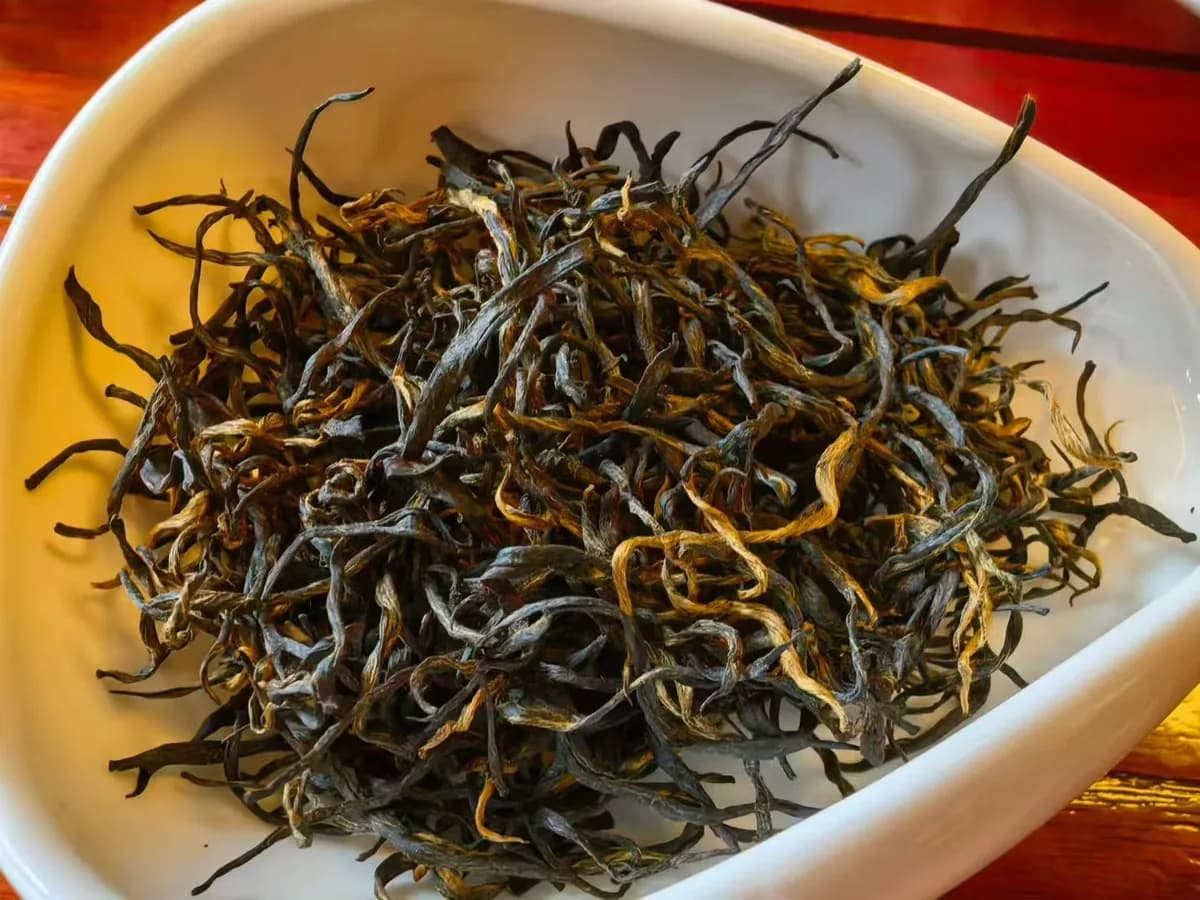
Orthodox gongfu black tea made from the Huangjincha cultivar. Post-Qingming plucking, full withering-to-drying process, five grades from pure bud to teabag cut.
Mehr erfahren →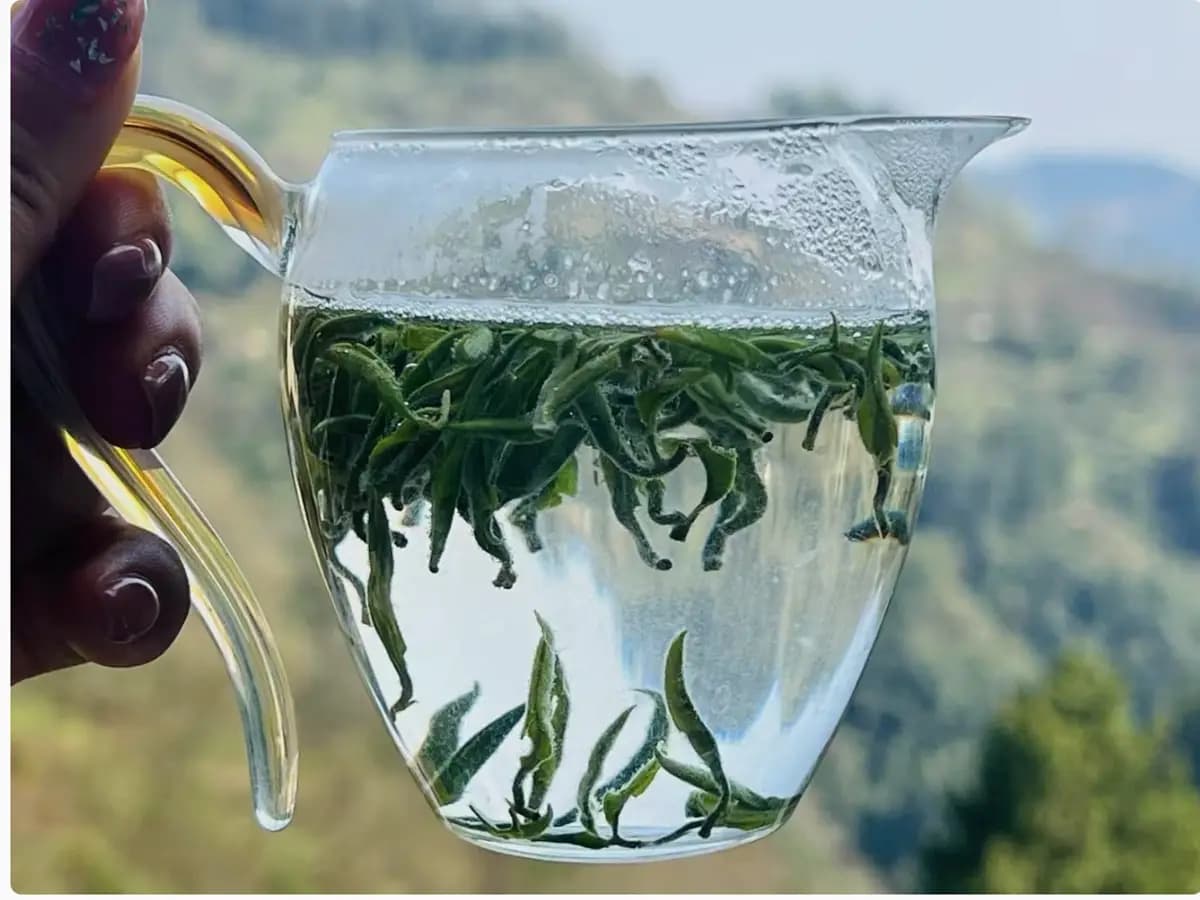
Green Tea
Pre-Qingming green tea from cultivars No.1, No.2 and No.8 — the grades the origin is best known for domestically, in export-ready packing.
Mehr erfahren →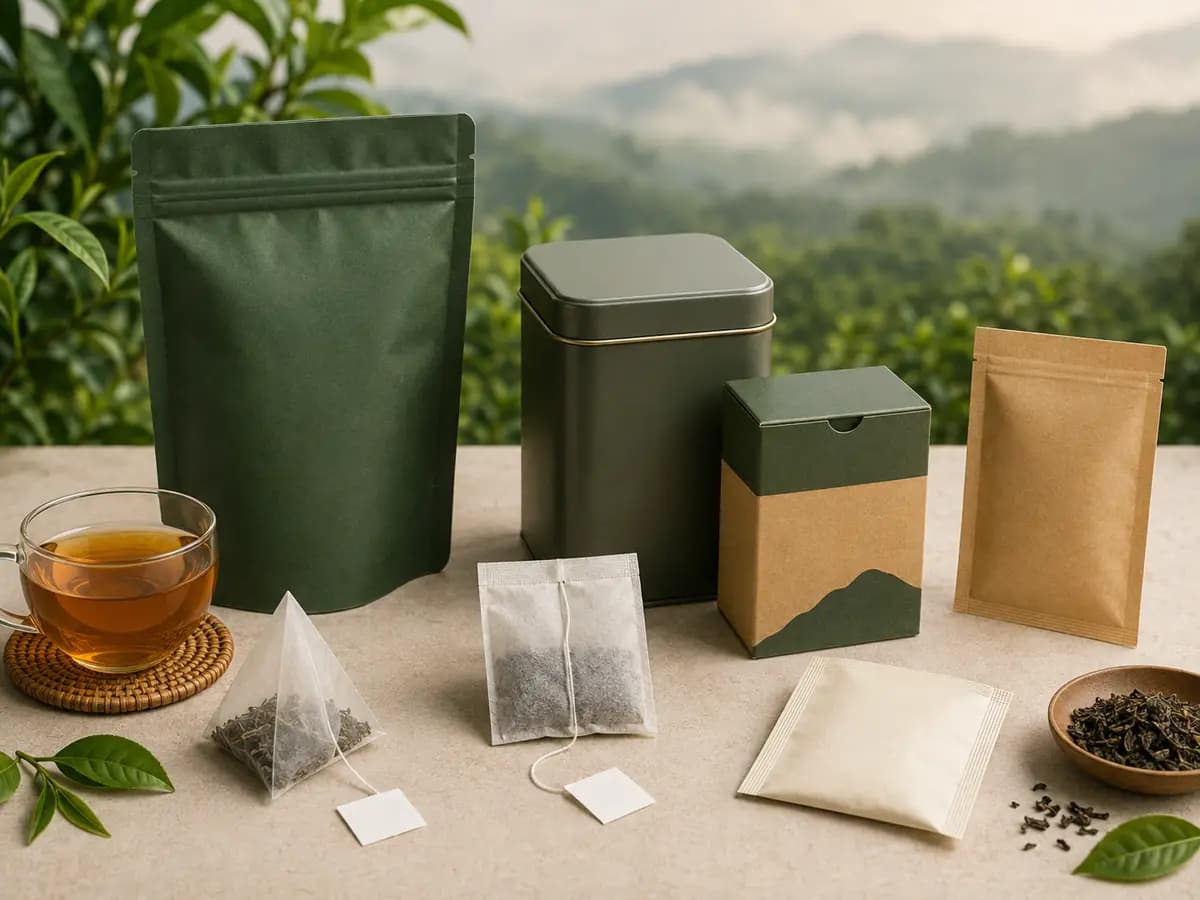
Custom & Private Label
The same tea, filled and printed to your specification — from 2 g hotel sachets to 25 kg bulk cartons, with your brand on the pack.
Mehr erfahren →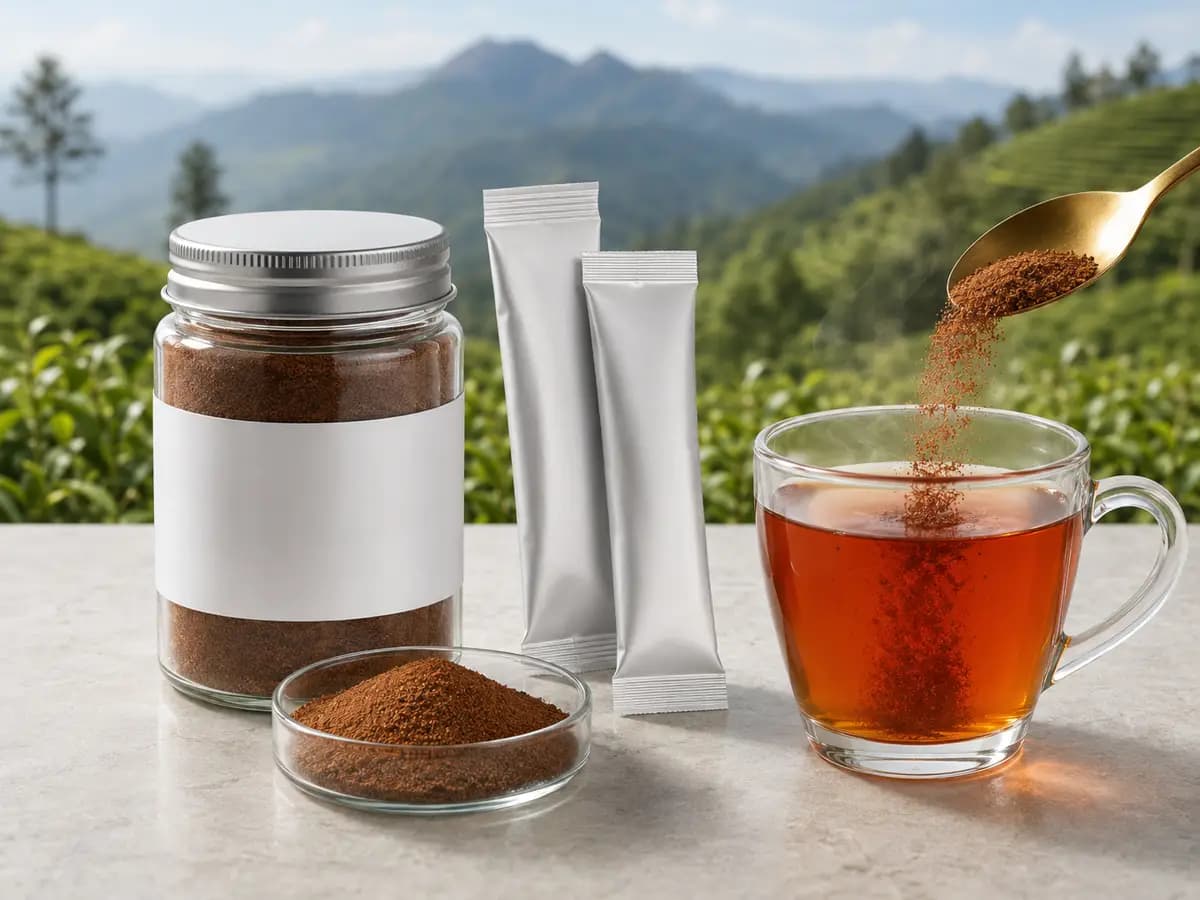
Instant Powder
Spray-dried instant tea powder and extract for beverage, RTD and bubble-tea manufacturers — specified on solubility, colour value and batch consistency.
Contract-manufactured at partner facility
Mehr erfahren →
Personal Care (OEM)
Contract manufacturing of tea-saponin and camellia-oil personal care under your brand. You own the brand and the cosmetic registration; we manufacture to your specification.
Contract-manufactured at partner facility
Mehr erfahren →Why this origin
Warum Einkäufer diese Herkunft wählen
A name protected in EU law
“Xiangxi Golden Tea” is a registered geographical-indication certification mark (No. 15887938), and its validity was upheld on challenge by the Beijing High People’s Court. For a buyer, that is not a marketing claim to evaluate — it is a register to check.
A composition figure you can verify
7.8% amino acids, roughly twice comparable cultivars from the same harvest period. It is a laboratory number, reproducible on your own sample, and it is the compositional reason behind the sweetness and low astringency in the cup.
Whole-garden contracts, not spot buying
We contract the full annual output of the gardens we buy from. That is why we can commit volume ahead of a season, and why every lot traces to a plot and a picking date rather than to a market floor.
Documentation treated as part of the product
Certificate of analysis, certificate of origin and phytosanitary certificate ship with the goods. EU multi-residue testing under Regulation (EC) 396/2005 is run before shipment, because that is where Chinese tea most often gets held.
Traceable to plot and picking date
Every lot carries a garden reference, altitude, cultivar, picking date and batch number. This is the thing large trading houses structurally cannot offer.
Documentation shipped as standard
Certificate of analysis, certificate of origin and phytosanitary certificate travel with the goods. Multi-residue screening is run before shipment, not on request.
Honest about what we do not do ourselves
Instant powder and personal care are contract-manufactured at partner facilities under our specification. We say so on the product pages, and we will arrange audit access.
A price ladder, not one price
Micro-lots at 5 kg through to commercial grades at 300 kg. A single supplier relationship covers both a premium shelf line and a volume programme.
Comparison
Worin wir uns von den Alternativen unterscheiden
| Large trading house | Marketplace supplier | This origin | |
|---|---|---|---|
| Breadth of range | Very wide | Wide | One origin, five lines |
| Price on commodity grades | Strongest | Strong | Not competitive |
| Traceable to plot and picking date | No — lots are pooled | Usually no | Yes, on every lot |
| Named cultivar and harvest window | Rarely | Rarely | Always |
| Protected designation of origin | Varies by lot | Unverified | Chinese GI mark, public register |
| Residue report tied to your lot | On request | Varies | Standard, before shipment |
| Who you talk to | Account manager | Sales agent | The people who buy the leaf |
| Can commit volume before a season | Yes | No | Yes — garden output is contracted |
Process
Vom Garten in den Container
Sechs kontrollierte Schritte, je Charge dokumentiert.
 01
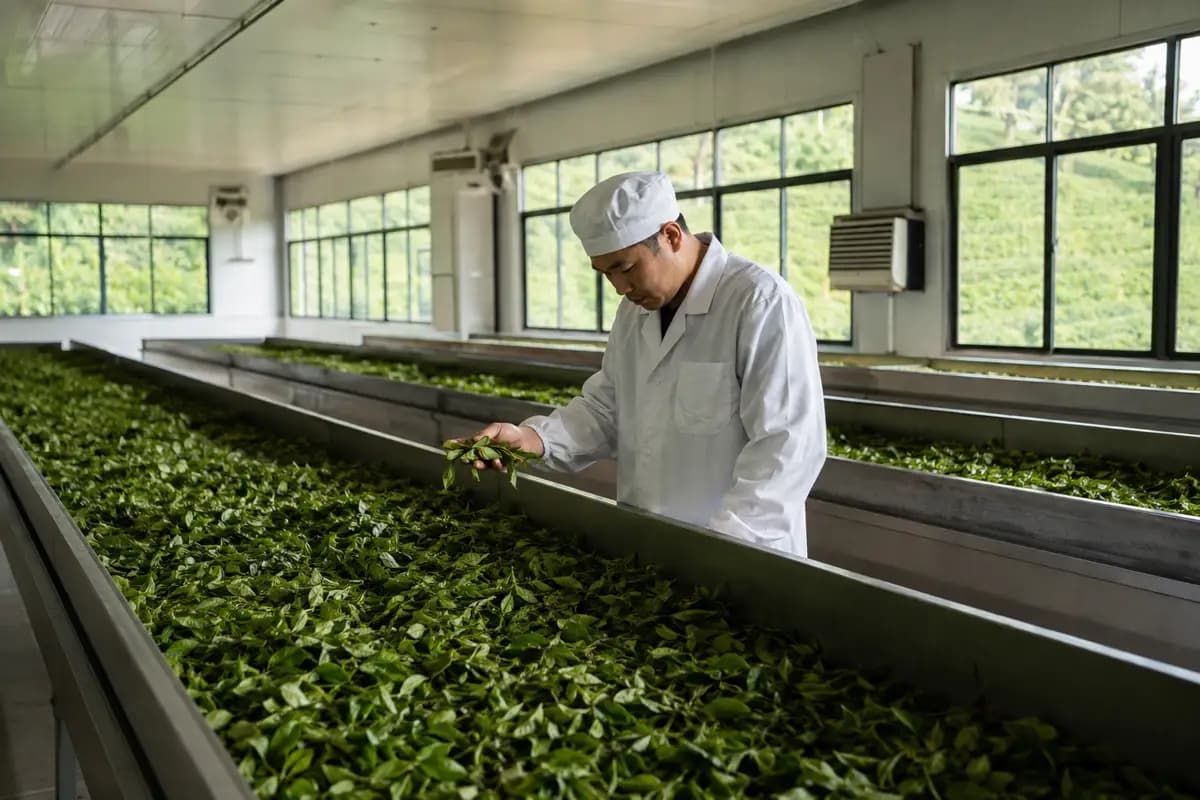
01Withering 萎凋
Fresh leaf is spread on trays for 12–16 hours to reduce moisture and make the leaf pliable enough to roll without tearing. Humidity and airflow are controlled; over-withering costs aroma, under-withering costs the roll.
 02
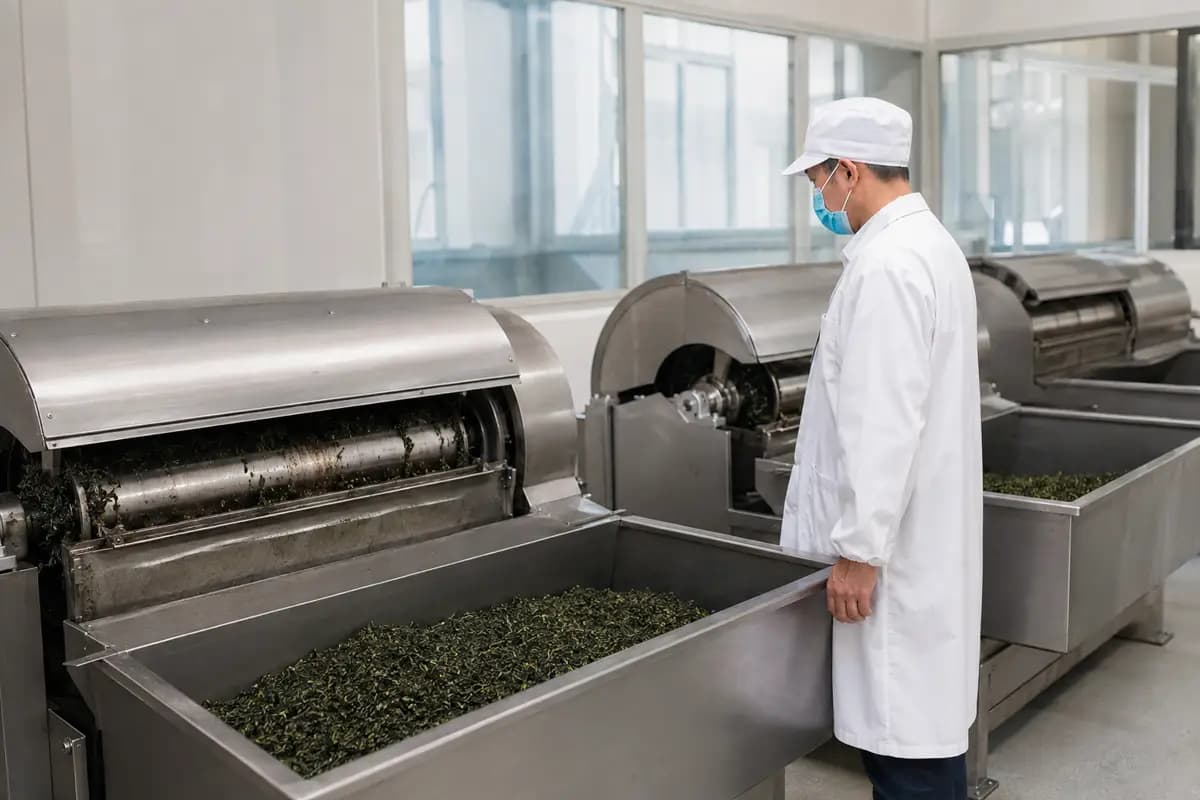
02Rolling 揉捻
The withered leaf is rolled in three stages of increasing pressure. Rolling ruptures the cell walls, releasing the enzymes and substrates that drive oxidation, and gives the finished leaf its twist.
 03
03Oxidation 发酵
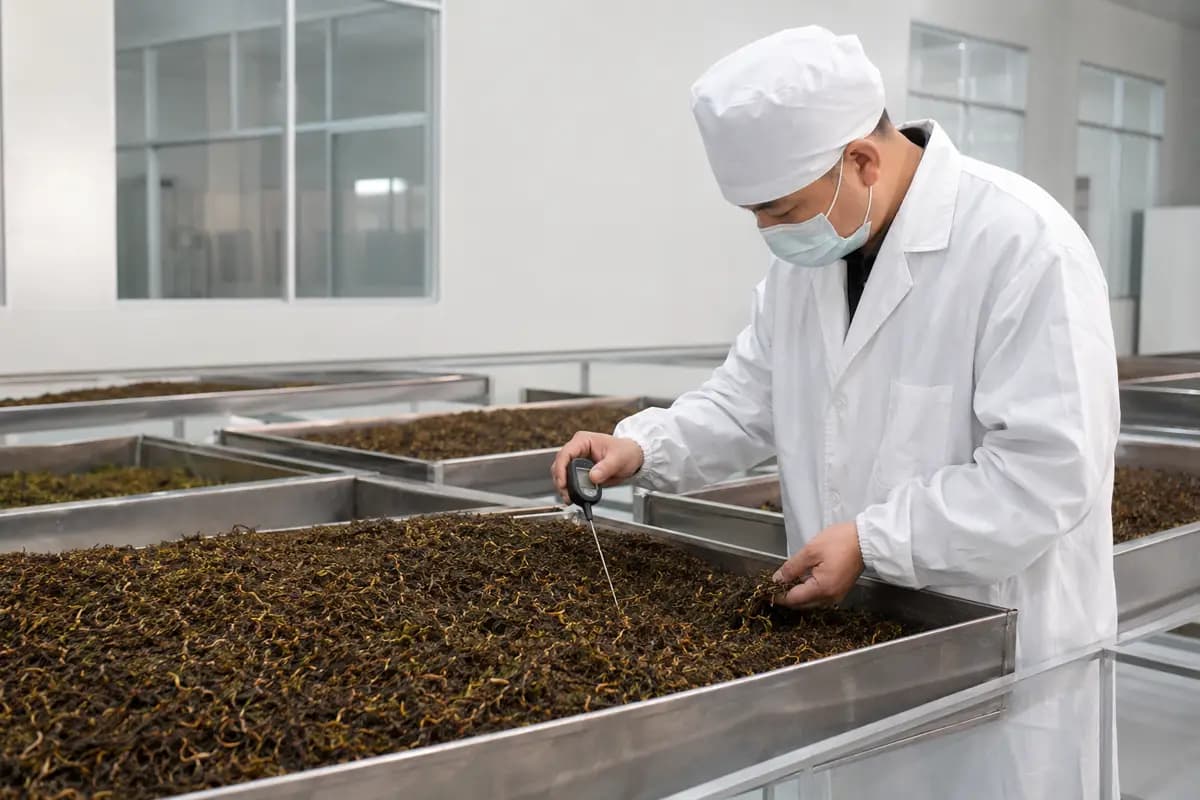
The rolled leaf rests in a humidity- and temperature-controlled room. This is the step that makes black tea black: polyphenols convert to theaflavins and thearubigins, and the leaf turns from green to copper. Timing is judged by aroma and colour, not by clock alone.
 04
04Drying 干燥
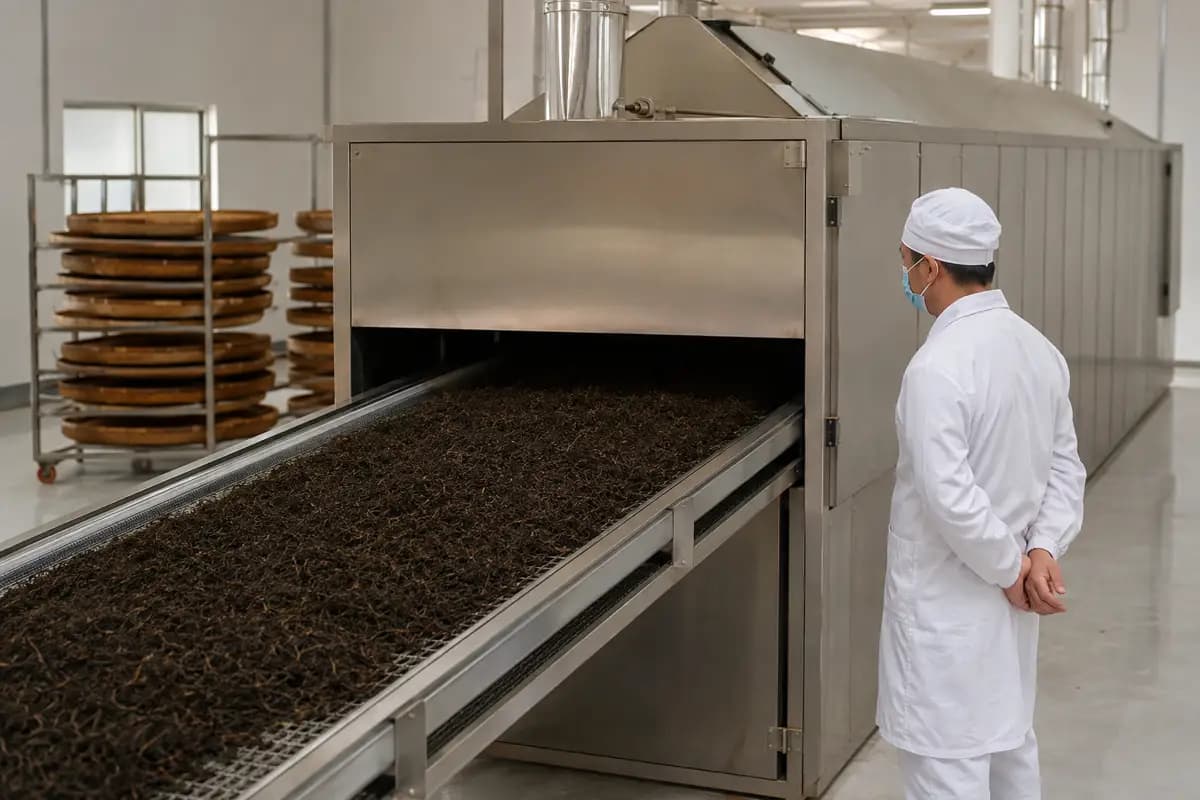
Hot-air drying halts oxidation at the chosen point and brings moisture down to a storable level. Done too fast the leaf case-hardens; done too slow the profile drifts.
 05
05Sorting & refiring 精制筛分
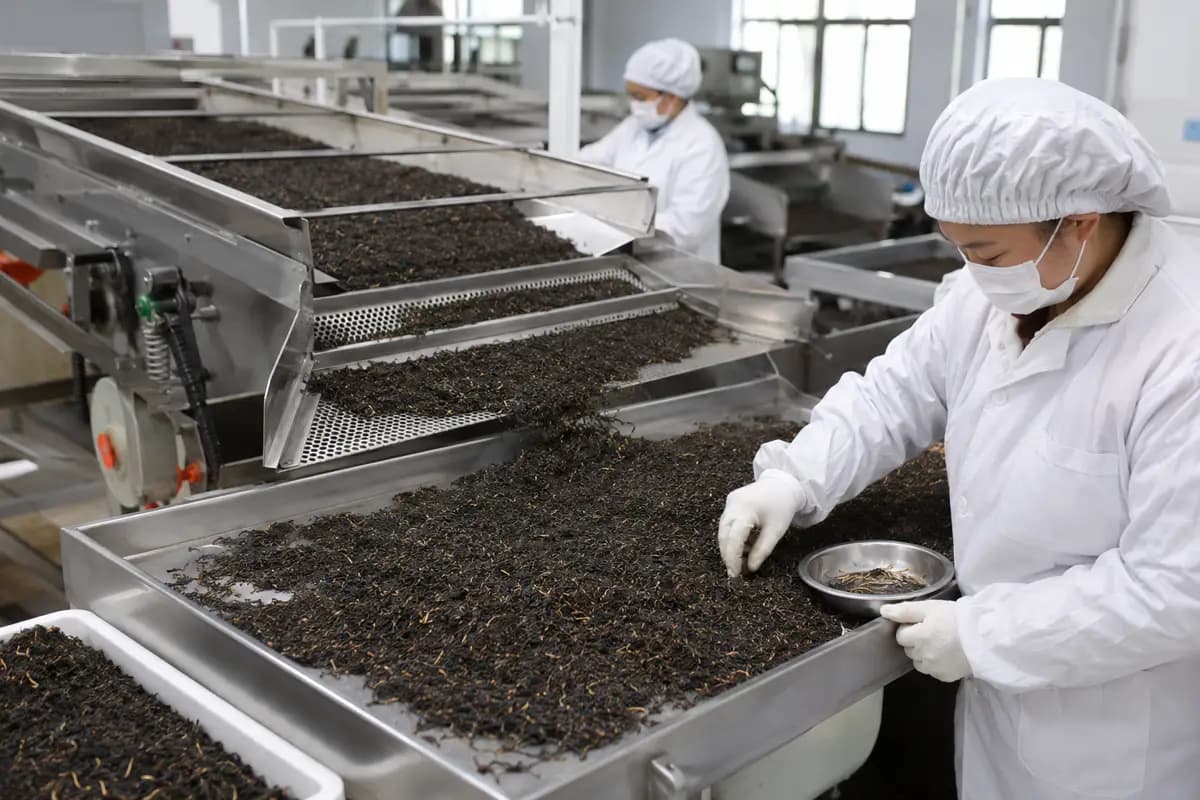
The dried tea is screened by size, winnowed to remove fibre and stem, and refired to final moisture. Grade separation happens here — Imperial, Premium, Commercial and teabag cut all come off the same sorting line.
 06
06Quality control & packing 审评与包装
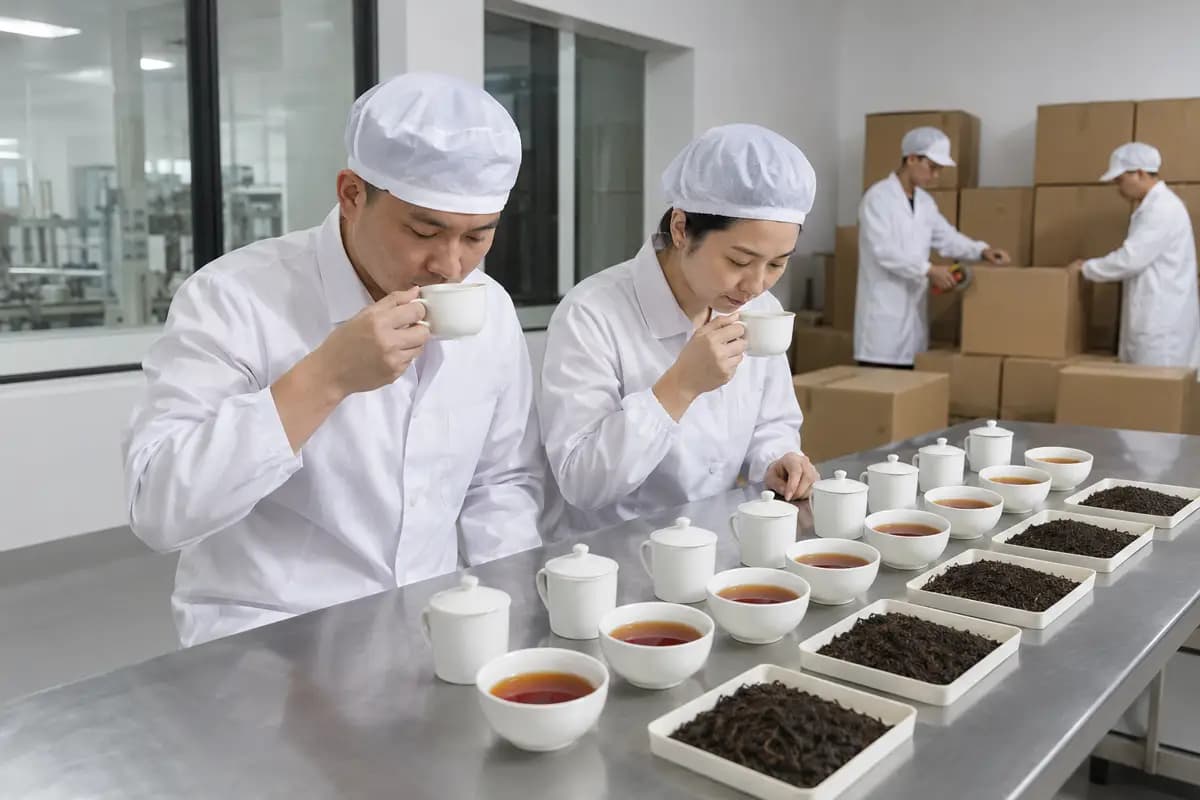
Every batch is cupped against retained reference samples and sampled for residue analysis. Cleared batches are packed into foil-lined cartons with lot number and production date, then palletised.
Applications
Wen wir beliefern
Specialty Tea Retailers
A geographical-indication origin with a documented story, verifiable composition data and grades that ladder from an entry bag to a micro-lot.
25 – 500 kg per order
Private Label Brands
Full private-label service from leaf selection to finished retail pack, with you as brand owner throughout.
1,000 – 50,000 units per SKU
Hotels & Foodservice
2 g branded room sachets, pyramid bags for restaurant service and bulk leaf for banqueting — costed per cup, not per kilo.
20,000 – 500,000 sachets per order
Beverage & RTD Manufacturers
Instant powders and extracts specified on solubility, colour value, acid stability and batch consistency, for bottling lines and bubble-tea chains.
100 – 5,000 kg per order
Tea Repackers & Blenders
Volume-grade leaf and teabag cut with stable specification, EU-compliant residue documentation and reliable seasonal availability.
300 – 20,000 kg per order
Importers & Distributors
Full export documentation, protected-name provenance and grades across the price ladder — for distributors building a Chinese tea portfolio.
500 – 20,000 kg per order
Buyer tools
Einkäufer-Tools
Kostenlose Rechner für Beschaffungsentscheidungen — Kalkulation, Aufgussverhältnisse, Erntezeitpunkte und Containerauslastung.
Wholesale Tea Cost Calculator
Turn a kilo price into cost per cup
Hotels, cafés, foodservice buyers
Tea Brewing Calculator
Leaf-to-water ratios, gongfu and Western
Retailers, cafés, training
Tea Caffeine Comparison
How tea compares with coffee
Retail, foodservice, product development
Chinese Tea Harvest Calendar
Resolve Qingming and Guyu for any year
Importers planning a season
Container Loading Calculator
How much tea fits in a 20 ft or 40 ft
Importers, distributors, logistics
Resources
Für Einkäufer
Fachliche und kaufmännische Beiträge für alle, die Tee professionell beschaffen.
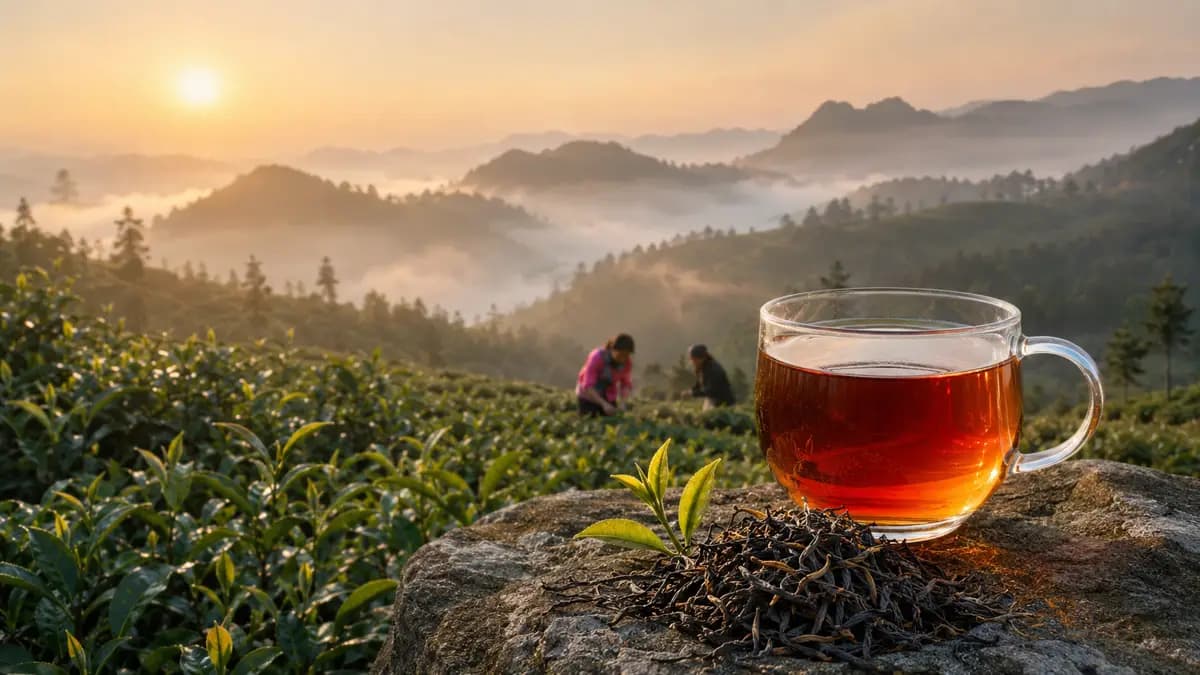
Was ist Xiangxi Golden Tea? Ein vollständiger Leitfaden
Eine eingetragene geografische Angabe, von der außerhalb Chinas kaum jemand gehört hat — was sie ist, woher sie kommt und warum ihre Zusammensetzung ungewöhnlich ist.
9 Min. Lesezeit
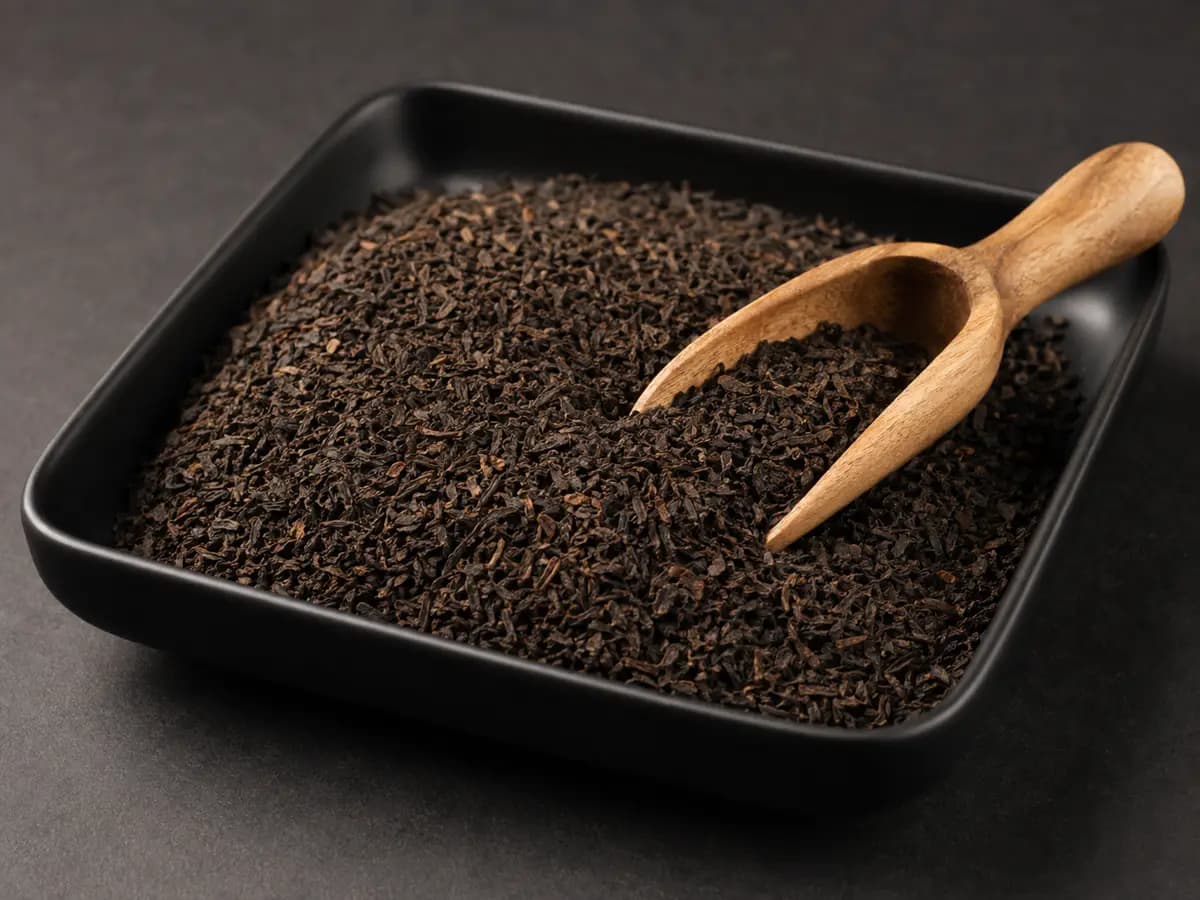
Chinesische Gongfu-Schwarzteeverarbeitung: die sechs Schritte
Es gibt kaum eine vollständige deutschsprachige Darstellung der chinesischen Gongfu-Schwarzteeverarbeitung, die für Einkäufer statt für Liebhaber geschrieben ist. Dies ist eine.
8 Min. Lesezeit
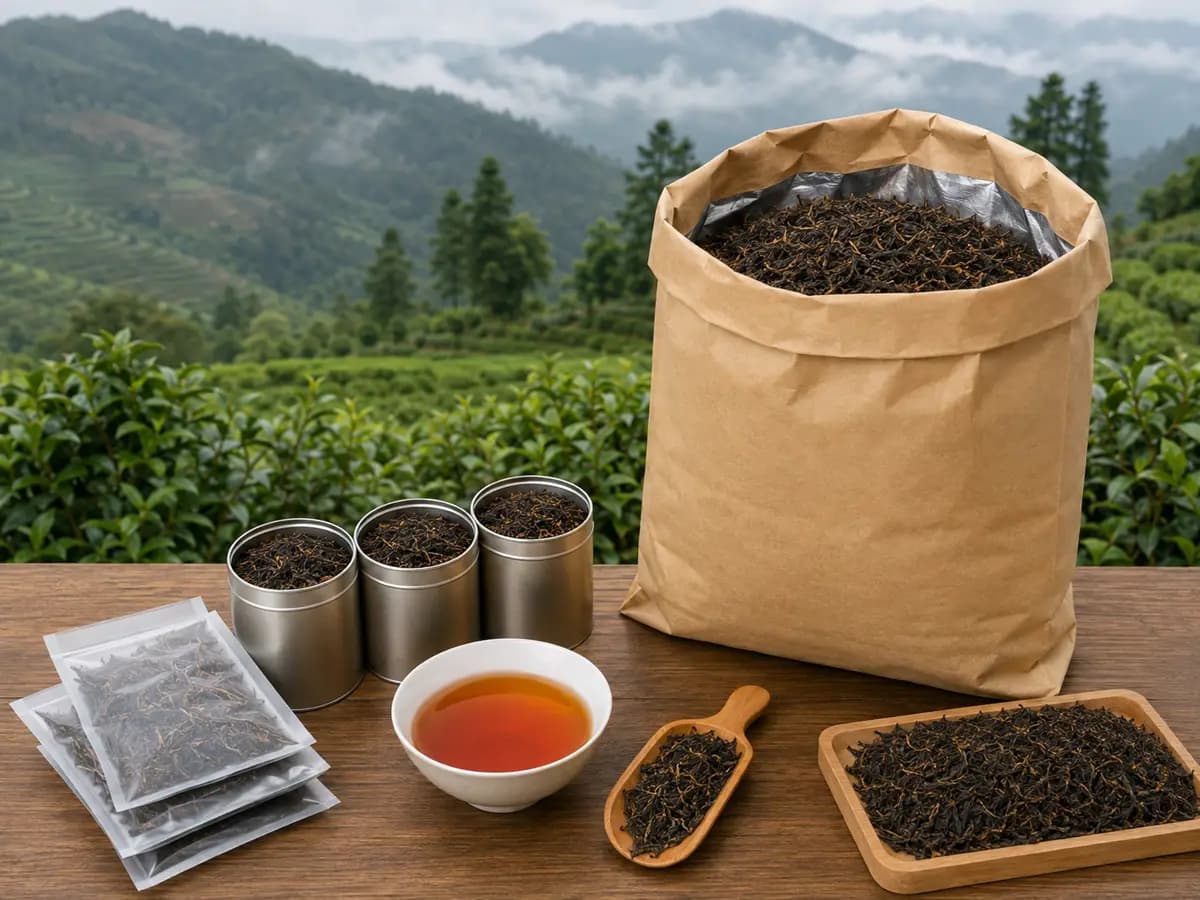
Tee in die EU importieren: Rückstände, Dokumente und Zoll
Pestizidrückstände sind der mit Abstand häufigste Grund für Beanstandungen von Tee an EU-Grenzen. Was die Vorschriften tatsächlich verlangen und wie man sich darauf vorbereitet.
10 Min. Lesezeit
Next step
Beginnen Sie mit einem Muster
Muster sind kostenfrei, die Fracht geht per Nachnahme. Nennen Sie uns Format und Zielmenge — wir senden repräsentative Partien mit dem zugehörigen Analysenzertifikat.
Tell us what you need
Format, grade, rough volume and destination market. A sentence is enough to start.
Samples, freight collect
We send representative lots from current production with the matching certificate of analysis.
Specification and quotation
Once you have cupped the samples, we fix specification and quote against it.
Production and documentation
Batch QC, residue screening, then the full export document set.
Shipment
FOB by default; CIF, CFR, DAP and rail freight to Europe and Central Asia on request.
Muster anfordern
Muster sind kostenfrei, die Fracht geht per Nachnahme. Wir senden repräsentative Partien aus der laufenden Produktion mit dem zugehörigen Analysenzertifikat.