EU-geschützte Herkunft · Gratismuster, Fracht per Nachnahme · MOQ ab 25 kg

Unsere Geschichte

Eine Unze Gold, 1539 aktenkundig

In the fourth month of the eighteenth year of the Jiajing reign — 1539 — a Ming censor named Lu Jie passed through Jishou while inspecting the border garrisons. What happened next is recorded in the Veritable Records of the Ming, and it is the origin of a phrase that people in these mountains still use: 一两黄金一两茶. An ounce of gold for an ounce of tea.

明世宗实录 · 1539一两黄金一两茶
01

A mountain that was already known

Tea from this part of western Hunan was not discovered by anyone. Local histories trace official tea production in the Qianling area to the Qin period — the reason our name is Daqin, Great Qin. For most of the intervening centuries the tea travelled inward, toward capitals, rather than outward.

That is the unusual thing about this origin: it has a long documented history and almost no export history. Keemun was built for the London market in the nineteenth century. This tea was not built for any market at all. It was simply what these mountains made.
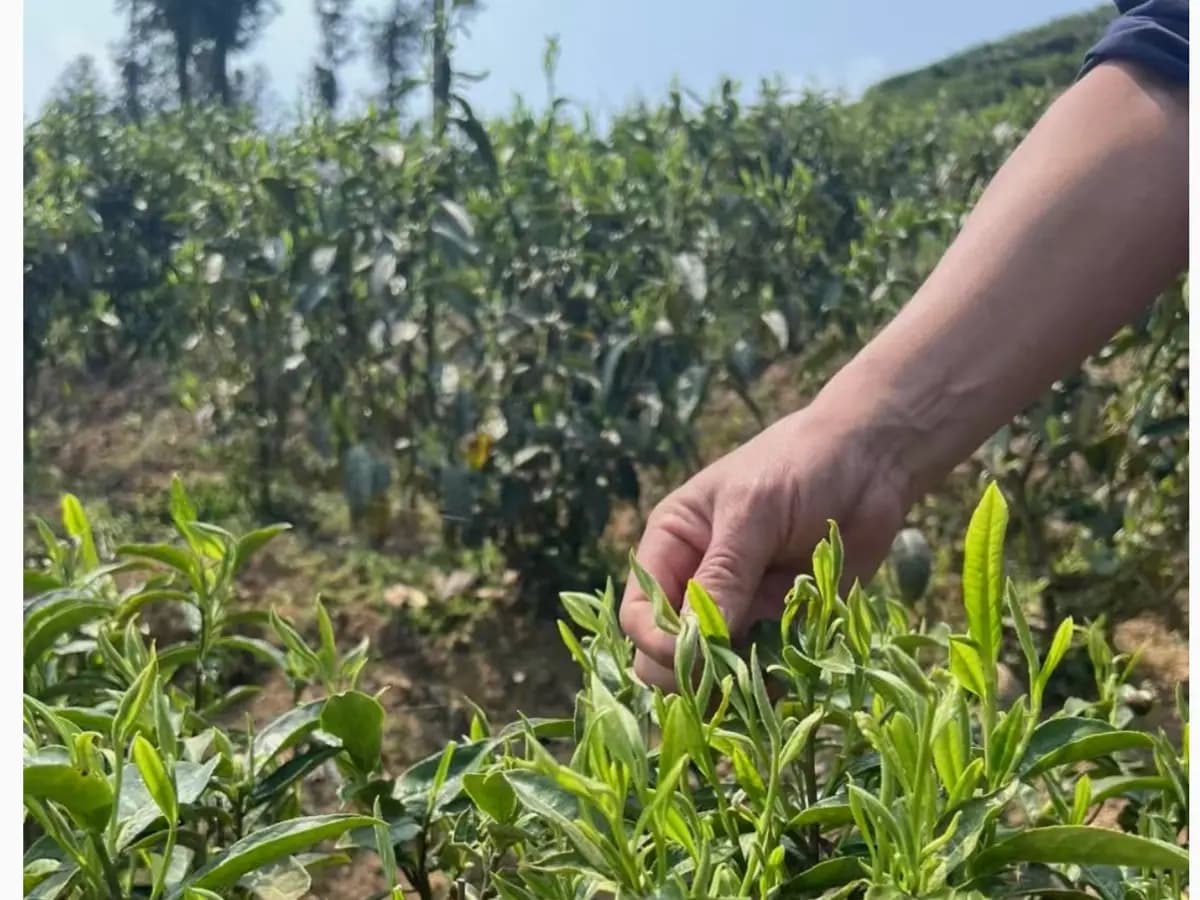
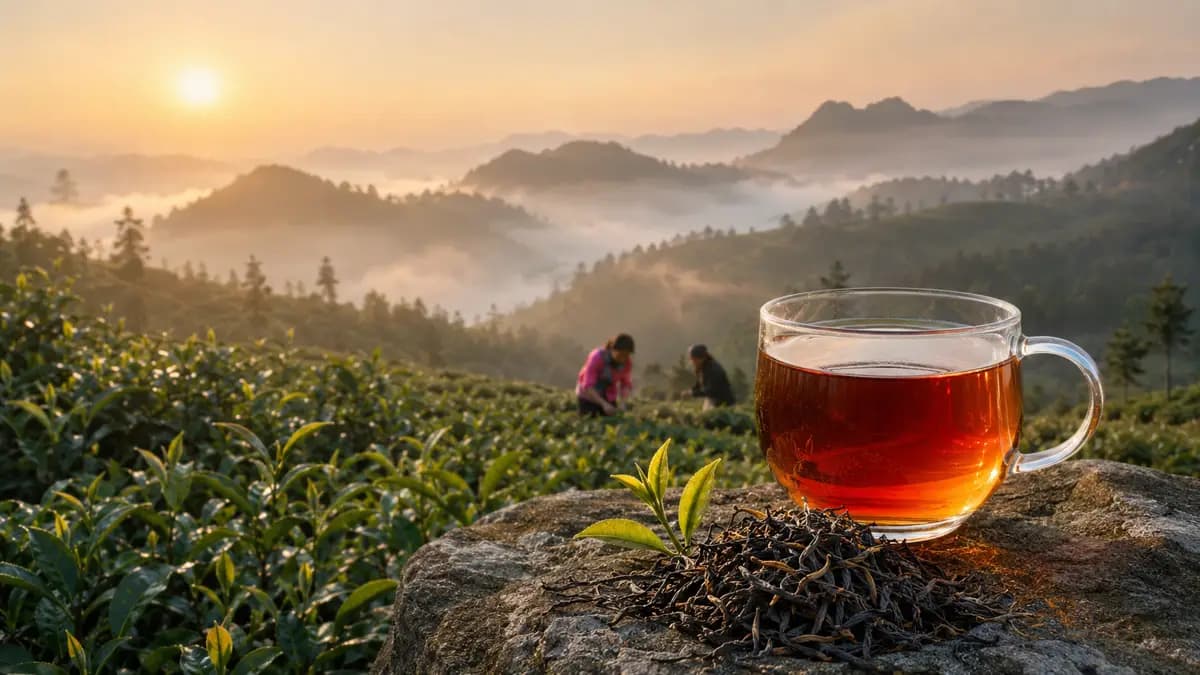
Tea leaves being hand-picked in a Jishou mountain garden
02

What a geographical indication actually protects

“Xiangxi Golden Tea” is registered as a geographical-indication certification mark, No. 15887938, applied for on the prefecture’s behalf by the Jishou Jingguo Extension Station. When the registration was later challenged, the Beijing High People’s Court upheld it.

Those two registrations do something specific: they attach the name to a place rather than to a company. We do not own this name and neither does anyone else. What we can do is work inside it, and be checkable.

What distinguishes Xiangxi Golden Tea from other Chinese teas
03

The gardens belong to families

We contract the full annual output of the gardens we buy from. The land stays with the farming families who work it; the picking standard, the timing and the offtake are agreed with us before the season starts.

This is not a charitable arrangement and we would rather not present it as one. It is simply the structure that lets a small supplier commit volume ahead of a season instead of bidding for it afterwards — and the only structure under which a lot can honestly be traced back to a plot and a day.

It also means that when a season is poor, it is poor for both of us. We think that is the correct alignment.

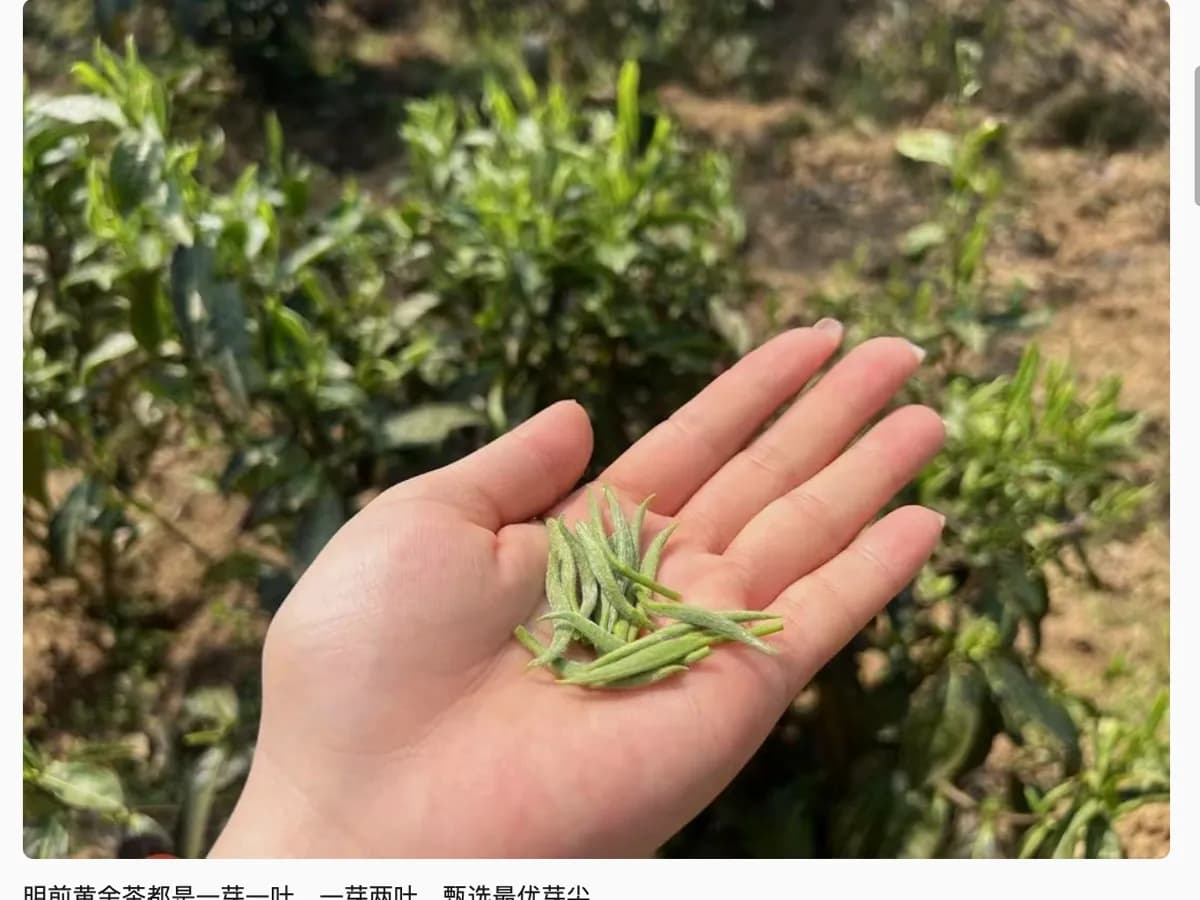
Fresh tea shoots showing the one-bud-one-leaf plucking standard
04

Two weeks, once a year

The pre-Qingming window lasts about a fortnight. In that time the whole year's finest green tea is picked by hand, one bud and one leaf at a time, and fired the same day.

Then the gardens change over. From mid-April the same bushes go to black tea, where slightly older leaf is an advantage rather than a compromise. By June the season's character has already been decided.

There is no way to hurry any of this, and no version of it that scales by pressing harder. That constraint is the product.

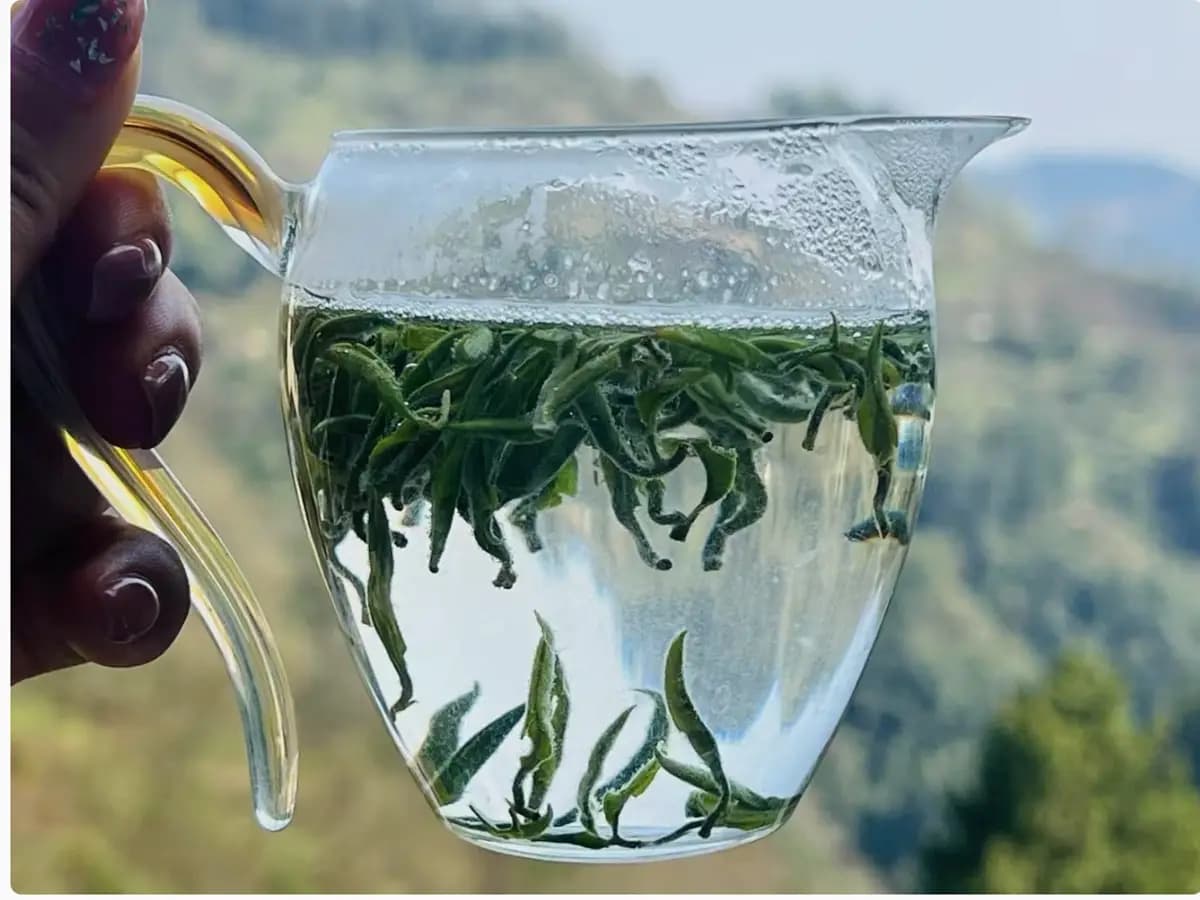
Xiangxi green tea leaves steeping in a glass pitcher against the tea gardens
05

Why we are telling you this

Most tea reaches a Western buyer through several hands, and by the time it arrives the answer to "where is this from?" has become "China."

We are a small supplier and we cannot compete with a trading house on price, breadth or logistics. What we can do is answer that question precisely — this mountain, this block, this day, this batch number, this analysis report — and let you check every part of it.

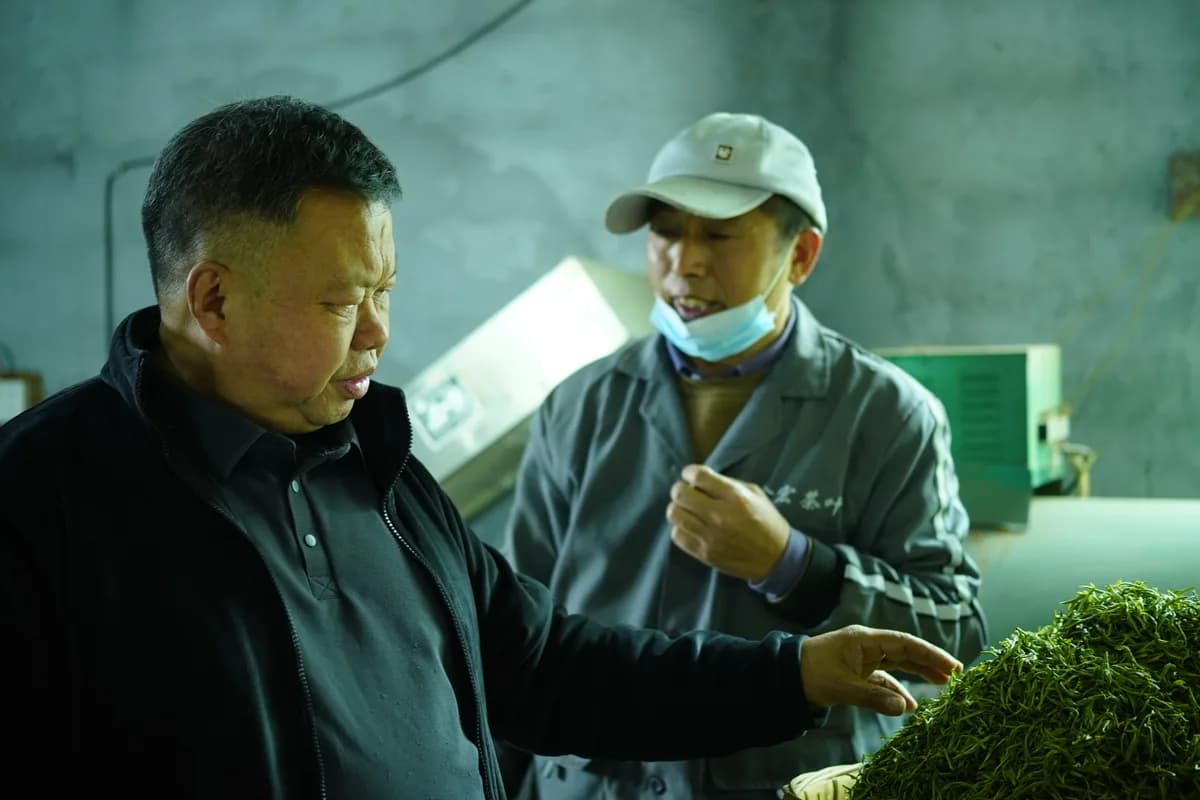
Founder and tea maker inspecting a batch of fresh leaf on the processing line

The rest is checkable

Everything above that can be verified, we have made verifiable — the 1539 entry is in the Veritable Records, the registration number is in two public registers, and the analysis report ships with the goods. Start with a sample and check it yourself.

WhatsAppE-MailMuster anfordern