Articles
Private Label Tea Personal Care: What a Brand Owner Actually Signs Up For
The manufacturing is the easy part. What catches brand owners out is that in both the EU and the US, the legal duties of a cosmetic product land on you — not on the factory that made it.
Updated 2026-08-03 · 11 min read
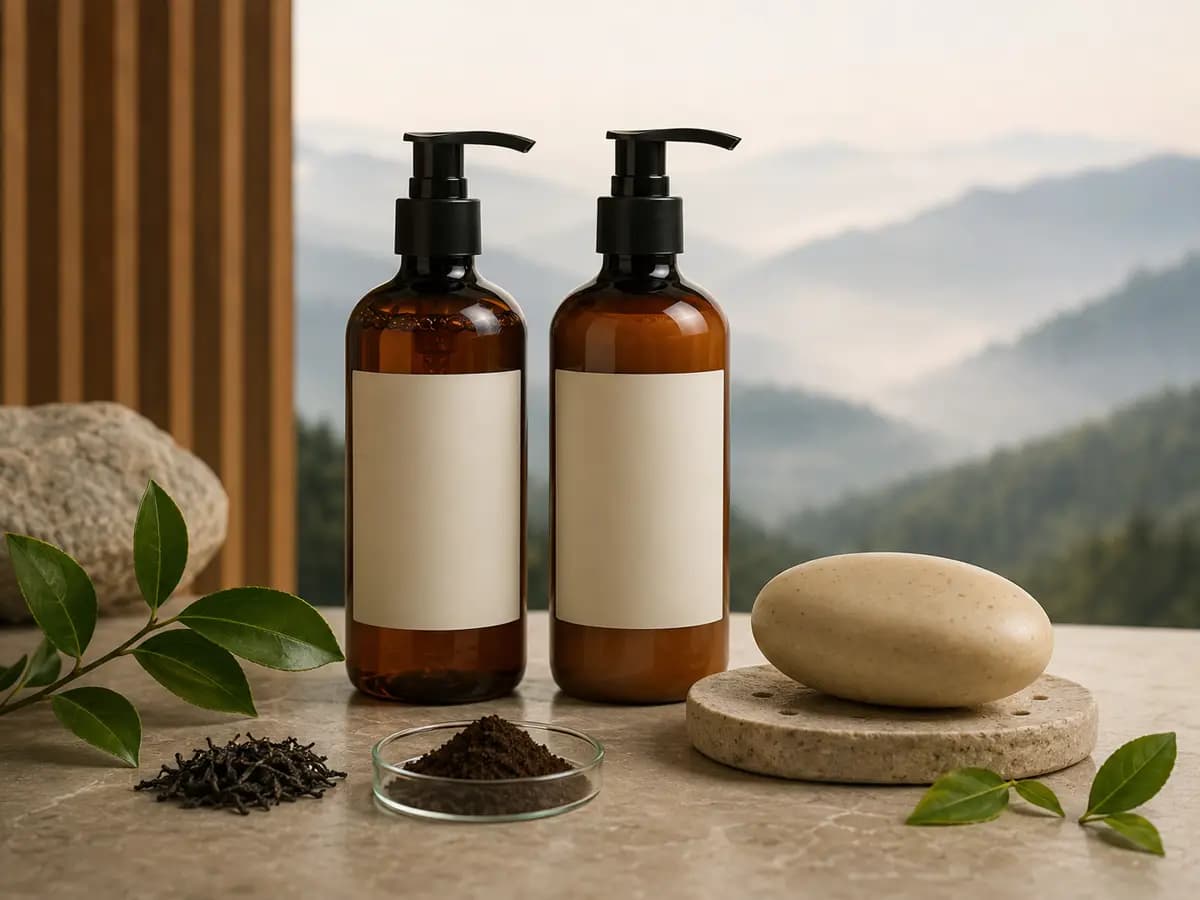
When you commission tea-based personal care under your own brand, you are not simply buying product — you are becoming the legally responsible party for a cosmetic in your market. In the EU that role has a formal name and must be a person or company established in the EU. In the US, recent legislation created registration and listing duties that sit with the brand owner. Neither obligation transfers to a Chinese contract manufacturer, no matter what the supply agreement says.
We say this at the start because it is the single most common misunderstanding in this category, and because it changes the shape of the project: the regulatory work is usually longer than the manufacturing.
Who carries what
| Duty | Contract manufacturer | You, the brand owner |
|---|---|---|
| Formulating to specification | ✓ | |
| Manufacturing under GMP | ✓ | |
| Batch records and retained samples | ✓ | |
| Product safety assessment | Supports with data | Commissions and owns it |
| EU: Responsible Person, established in the EU | ✓ | |
| EU: CPNP notification before placing on market | ✓ | |
| EU: Product Information File, kept for 10 years | Supplies inputs | Holds it |
| US: facility registration and product listing | Facility side | Listing side |
| Labelling compliance in the destination market | Prints what you approve | ✓ |
| Claims substantiation | ✓ |
The row that surprises people is the Responsible Person. It cannot be your Chinese supplier. It must be a natural or legal person established in the EU, named on the pack, and reachable by authorities. If you do not have an EU entity, you appoint a service provider — that is a real, recurring cost and it belongs in your unit economics from the first spreadsheet, not discovered at launch.
Claims are where projects go wrong
Tea-derived ingredients attract claims easily, and most of the appealing ones are not permitted on a cosmetic. In the EU, cosmetic claims are governed by common criteria that require every claim to be substantiated with adequate evidence, and a cosmetic may not be presented as having properties to treat or prevent disease — that would make it a medicinal product with an entirely different approval route.
| Framing | Status | Why |
|---|---|---|
| "Contains Camellia sinensis leaf extract" | Safe | A factual composition statement |
| "Leaves hair feeling soft and manageable" | Usually fine | Cosmetic effect, but still needs substantiation |
| "Reduces hair loss" / "treats dandruff" | High risk | Reads as a therapeutic claim; may reclassify the product |
| "Antioxidant protection for your scalp" | High risk | Health-adjacent, hard to substantiate for a rinse-off |
The commercially useful position is to sell the origin and the formulation story — a named cultivar, a documented growing area, a specific extract — rather than a benefit you would have to defend. Origin is checkable; benefits invite enforcement.
Formats and what each one demands
| Format | Typical MOQ driver | Main technical risk |
|---|---|---|
| Liquid shampoo | Bottle and closure tooling | Preservative system and stability over shelf life |
| Solid shampoo bar | Mould and wrap | Hardness and dissolution rate in use; humidity in transit |
| Camellia seed oil soap | Mould and carton | Cure time; oil quality variation between seasons |
Solid formats travel better and are lighter per unit sold, which matters when you are shipping from China. They are also less forgiving of humidity — a bar that is fine on arrival can soften in a warm warehouse. Specify packaging with transit conditions in mind rather than shelf appearance alone.
A realistic timeline
| Stage | Duration | Runs in parallel? |
|---|---|---|
| Brief, benchmark and formulation direction | 2–3 weeks | |
| Lab samples and iteration | 3–6 weeks | |
| Stability testing | 8–12 weeks | Critical path — cannot be compressed |
| Safety assessment and PIF assembly | 3–6 weeks | Yes, alongside stability |
| CPNP notification / US listing | 1–2 weeks | After the safety assessment |
| Packaging design and tooling | 4–8 weeks | Yes |
| Production and QC release | 3–5 weeks |
Stability testing is the item people try to skip. Accelerated protocols shorten it, but a preservative system that has not been challenged over time is a recall waiting to happen — and a recall in cosmetics is far more expensive than in tea. Plan six months from brief to first shipment and treat anything faster as a bonus.
Questions to ask before you commission anything
- Which facility manufactures this, and can I audit it?
- What stability data will I receive, at what conditions and durations?
- Who writes the safety assessment, and is that person qualified under my market's rules?
- Will you supply the ingredient documentation my Product Information File needs?
- What is the minimum order per SKU, per shade or scent variant?
- What happens to unused bulk if I change the packaging mid-project?
Question five catches most first-time brand owners. Minimums usually apply per variant, not per project — three scents is three minimums. The cheapest way to launch is one format, one variant, and a second run once you know what sells.