Articles
Private Label Tea: From Sample to First Container
The realistic timeline is four to six months, and artwork approval is almost always what delays it — not production.
Updated 2026-08-01 · 9 min read
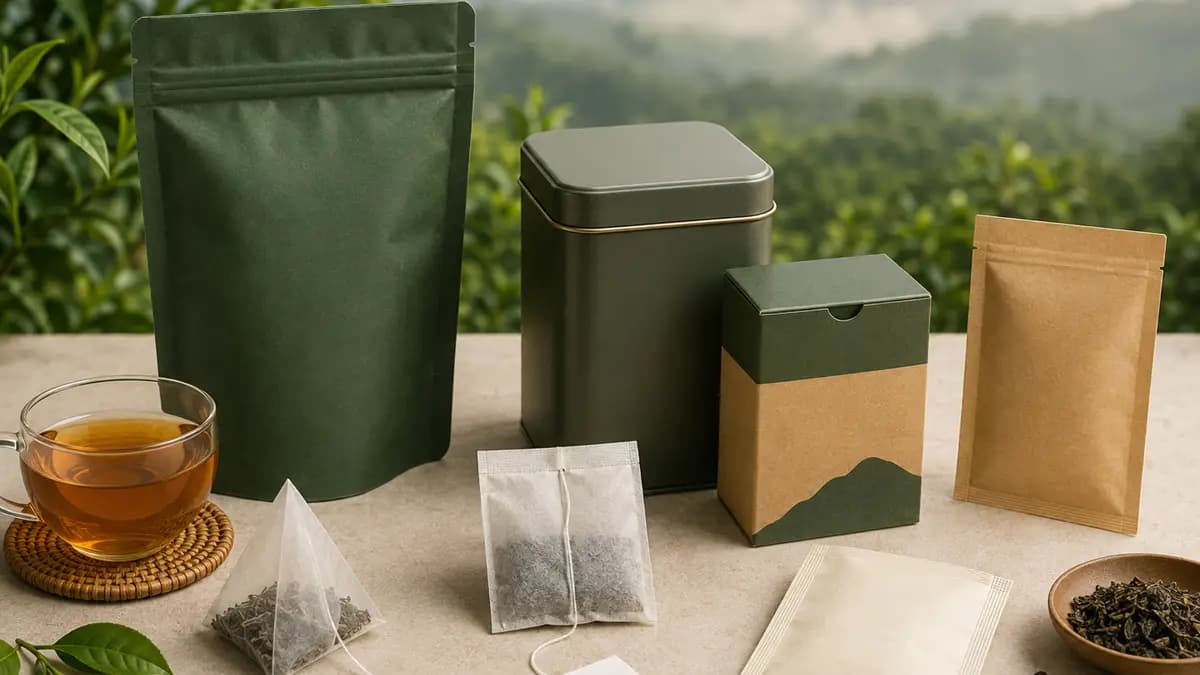
A first private-label tea production run takes four to six months from first contact to goods on the water. Most of that is not manufacturing. Manufacturing is around thirty days; the rest is decisions.
The timeline
| Phase | Duration | What happens | Common delay |
|---|---|---|---|
| Sampling | 2 – 4 weeks | Request samples, cup, shortlist | Waiting on courier; not testing enough options |
| Specification | 1 – 2 weeks | Fix grade, format, fill weight, MOQ | Changing format after pricing |
| Artwork | 3 – 8 weeks | Design, compliance review, proofing | The single biggest cause of delay |
| Pre-production | 1 – 2 weeks | Material sourcing, print proofs, first-article sample | Proof rejection cycles |
| Production | 3 – 5 weeks | Filling, sealing, cartoning, QC | Rarely the bottleneck |
| Documentation & shipping | 1 week + transit | COA, CO, phyto, booking | Missing residue report |
Phase 1 — Sampling
Request samples from at least three suppliers against the same nominal specification, and cup them blind. Free samples with freight collect is the industry standard; a supplier who charges for a first sample is either very small or not serious about your business.
Ask for the certificate of analysis with the sample, not later. It tells you whether the supplier runs actual testing.
Phase 2 — Specification
Fix these before requesting a firm price, because changing any of them re-opens the quotation: grade, pack format, fill weight, closure type, mesh material for bags, carton configuration, and order quantity per SKU.
Phase 3 — Artwork (where projects stall)
Artwork is where four to eight weeks disappear. The design itself is quick; the compliance content is not.
- Legal product name in the destination language.
- Net quantity in the required format.
- Best-before date and lot marking, with the printing method decided.
- Business operator name and address — for the EU, this must be an entity inside the EU.
- Country of origin where omission would mislead.
- Barcode: you supply the EAN or UPC; it must be allocated to your company, not borrowed.
- Nutrition declaration where required for the product type.
- Recycling and material marks per destination market.
Have this reviewed by someone who knows your destination market's rules before proofing, not after. Reprinting because the operator address was wrong is an expensive way to learn.
Phase 4 — Pre-production
Insist on a first-article sample: one finished unit, made on the real line with the real materials. Approve that physically before full production. A digital proof will not show you how the foil takes the ink or whether the zipper actually reseals.
Phase 5 — Production and QC
- Fill-weight verification across the run.
- Seal integrity testing.
- Print registration and colour against the approved proof.
- Date and lot code legibility.
- Retained samples from the run, held by both parties.
Phase 6 — Documentation and shipping
Confirm the residue report covers the actual production lot and that lot numbers match across report, packing list and cartons. This is the most common last-minute failure, and it is entirely avoidable.
Budgeting the first run
- Expect first-run unit costs above your steady-state target; setup and plate costs amortise over one order only.
- Order enough to make the setup worthwhile, but not so much that a design change strands stock. For a new SKU, three to six months of forecast demand is a reasonable balance.
- Budget for a second, smaller run sooner than you think — first designs almost always get revised.