Articles
How to Import Tea into the EU: MRL, Documentation & Customs
Pesticide residues are the single largest cause of tea detentions at EU ports. Here is what the rules actually require and how to prepare for them.
Updated 2026-08-01 · 10 min read
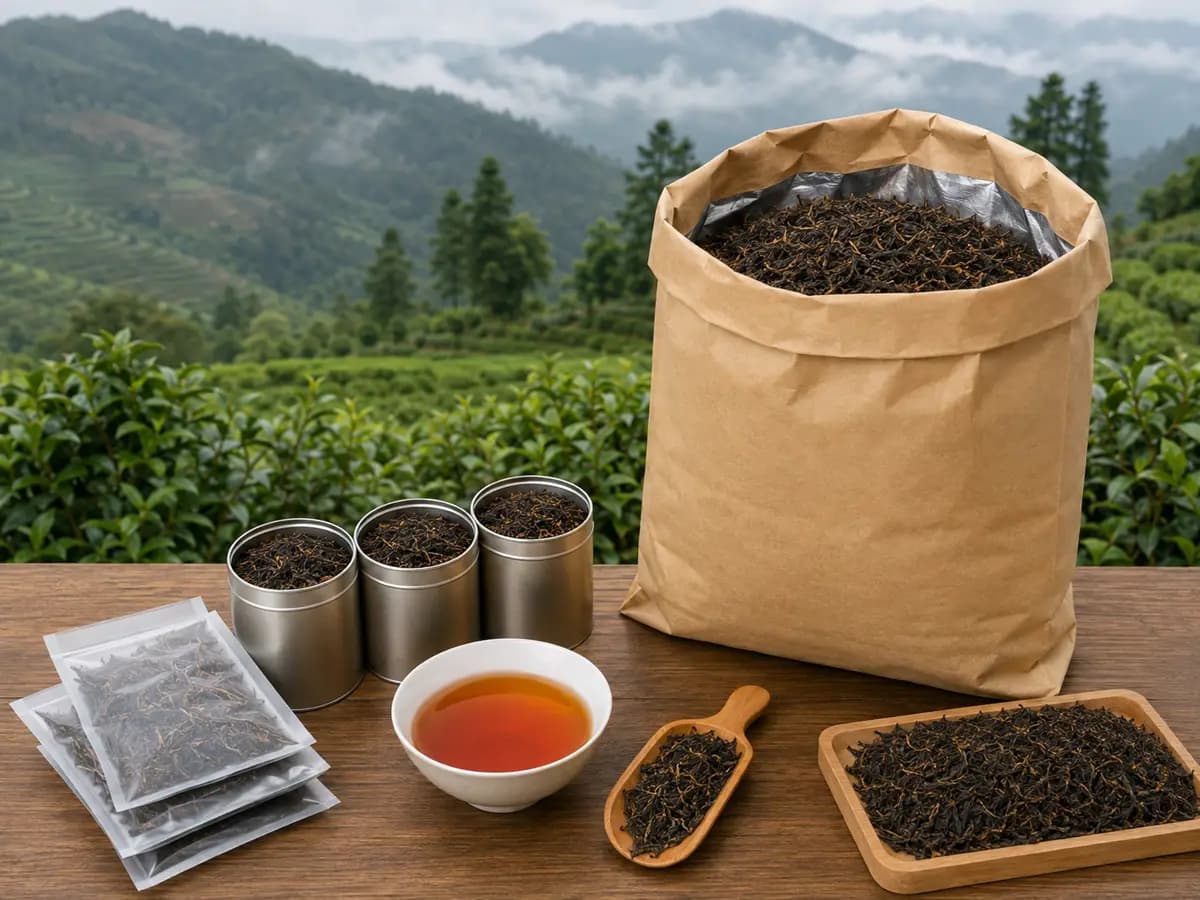
The single largest cause of tea consignments being detained at EU borders is pesticide residues exceeding maximum residue levels. Everything else — documentation, classification, labelling — is administratively fiddly but rarely fatal. Residues are what stop a container.
Maximum residue levels
Regulation (EC) No 396/2005 sets maximum residue levels for pesticides in and on food, including tea. Two features of the regime catch new importers out.
- MRLs for tea are set on the dried leaf, not on the brewed liquor. Because the leaf is roughly a quarter of its fresh weight when dried, residues concentrate accordingly.
- Where no specific MRL has been set for a substance, a default limit of 0.01 mg/kg applies. This default is what most unexpected failures run into — not an exceeded specific limit, but a substance nobody thought to test for.
The practical consequence is that a multi-residue screen covering several hundred substances is the only meaningful test. A certificate showing five or ten substances tested tells you very little.
What to ask your supplier for
- A recent multi-residue report from an accredited laboratory (SGS, Eurofins, Intertek or equivalent), covering the EU panel.
- Confirmation that the report relates to the actual lot being shipped, not to a previous season.
- The lot number on the report matching the lot number on the cartons.
- For organic claims, a valid organic certificate and transaction certificate — organic status is separate from residue compliance and does not substitute for it.
A supplier who treats residue testing as an extra cost to be added at your request is telling you something. One who runs it as standard before shipment has already absorbed the risk into their process.
Customs classification
| Code | Description |
|---|---|
| 0902.10 | Green tea (not fermented), immediate packings ≤ 3 kg |
| 0902.20 | Green tea (not fermented), other |
| 0902.30 | Black tea (fermented) and partly fermented, immediate packings ≤ 3 kg |
| 0902.40 | Black tea (fermented) and partly fermented, other |
| 2101.20 | Extracts, essences and concentrates of tea; preparations based on them |
The three-kilogram threshold refers to the immediate packing, not the outer carton. Retail-ready 100 g pouches inside a 20 kg master carton classify under the ≤ 3 kg headings.
Documentation
- Commercial invoice and packing list.
- Bill of lading or air waybill.
- Certificate of origin.
- Phytosanitary certificate, where required by the member state.
- Certificate of analysis, including the multi-residue report.
- Organic certification and transaction certificate, where organic status is claimed.
Labelling for retail-ready goods
If you are importing finished retail packs rather than bulk, EU food information rules apply to the pack: legal product name, net quantity, best-before date, lot marking, business operator name and address within the EU, and country of origin where its omission would mislead. Allergen labelling is generally not engaged by pure tea but becomes relevant for flavoured blends.
The business operator address must be an EU entity — normally the importer. This is a common oversight when a non-EU brand owner has packaging printed abroad.
Geographical indications
Where a tea carries a protected geographical indication recognised in the EU, the name is legally reserved. Xiangxi Golden Tea is protected as a Chinese geographical-indication certification mark, registration No. 15887938. For an importer this cuts both ways: it protects you from competitors misusing the name, and it means the tea you buy under that name must genuinely originate in the defined area.
A practical checklist
- Confirm the multi-residue report before the goods leave, not after they arrive.
- Match lot numbers across report, packing list and cartons.
- Confirm HS classification with your broker, including the packing-size threshold.
- Check whether your member state requires a phytosanitary certificate for the specific product.
- For retail packs, have label artwork reviewed against EU rules before printing.
- Budget time for a first shipment to be sampled at the border — it frequently is.