Articles
What Actually Drives the Landed Cost of a Container of Tea
Two suppliers quote you the same FOB price per kilo. One container lands 18% cheaper than the other. Nothing was hidden — the difference was bulk density, and it was visible in the specification all along.
Updated 2026-08-03 · 10 min read
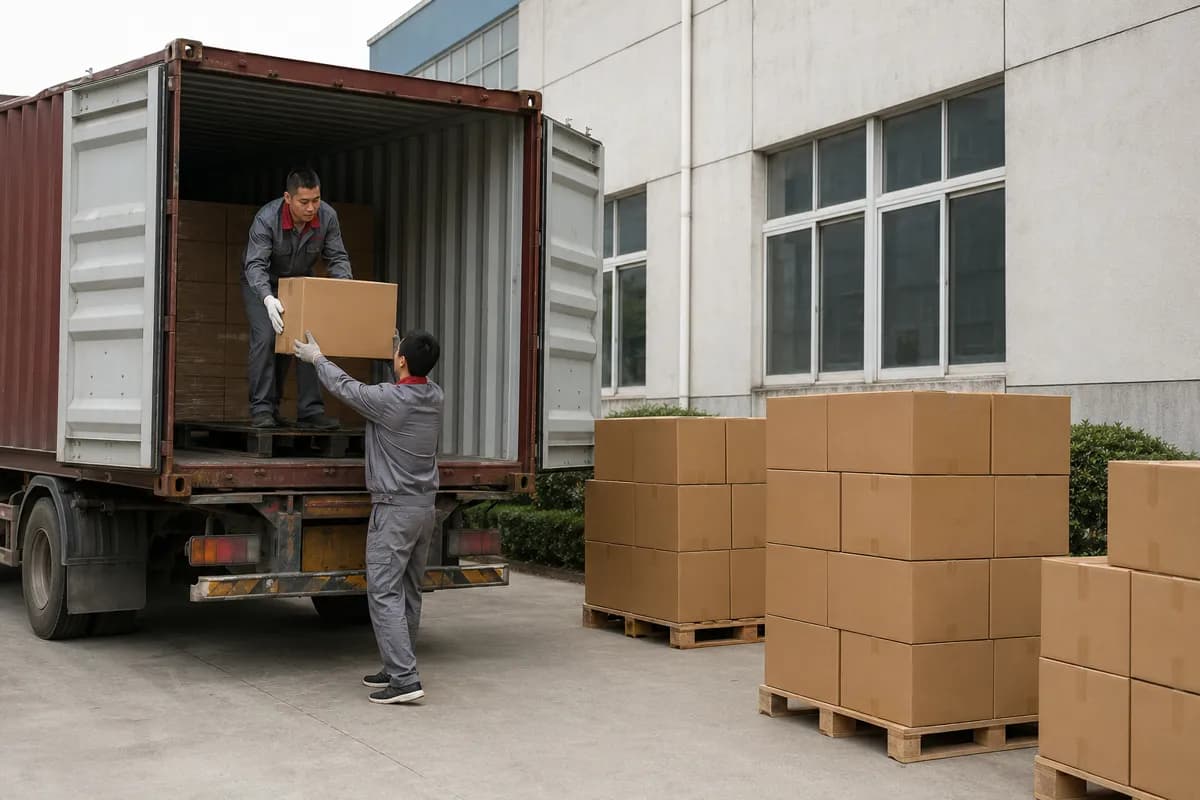
Landed cost is the total per-kilogram cost of tea delivered into your warehouse, including everything between the supplier's gate and your door. It is the only figure that lets you compare two offers honestly, and it is routinely two-thirds to three-quarters higher than the FOB price that buyers actually negotiate over.
The components, in the order they accumulate
| Component | What it depends on | Who usually controls it |
|---|---|---|
| Ex-works price | Grade, cultivar, plucking standard, season | Supplier |
| Inland to port of loading | Distance, whether the origin is inland | Supplier, under FOB |
| Export clearance and terminal handling | Port, documentation | Supplier, under FOB |
| Ocean freight | Container count — not weight | Market |
| Insurance | Cargo value, route | Whoever holds the Incoterm risk |
| Import duty | HS heading and origin | Regulation |
| Destination port charges | Port, terminal, demurrage exposure | You |
| Customs brokerage and inspection | Entry complexity, whether examined | You |
| Inland delivery | Distance from port | You |
| Finance and currency | Payment terms, hedging | You |
| Shrinkage and rejection | Specification discipline | Both |
Tea cubes out long before it weighs out
This is the single most useful thing to understand about tea freight. A 20-foot container can legally carry roughly 21–22 tonnes of payload. A container of whole-leaf black tea will be completely full at a fraction of that, because tea is bulky relative to its weight. You pay for the container, not for the kilos, so the cost per kilo of freight is set by how much tea physically fits.
Bulk density is the number that governs this, and it varies more than most buyers expect. Whole-leaf orthodox tea with intact twisted leaf is light and airy. The same tea cut for teabags is denser, and CTC granules denser again. The difference between the extremes can be more than double.
| Format | Indicative bulk density | Relative kg per container |
|---|---|---|
| Whole-leaf orthodox, twisted | 0.25–0.30 g/ml | Lowest |
| Whole-leaf, tippy / downy grades | 0.22–0.28 g/ml | Lowest |
| Broken leaf | 0.32–0.38 g/ml | Moderate |
| Teabag cut | 0.38–0.45 g/ml | High |
| CTC granules | 0.50–0.60 g/ml | Highest |
The practical consequence: if you are comparing a whole-leaf offer against a teabag-cut offer on FOB price per kilo alone, you are ignoring a freight difference that can exceed the price difference. Ask every supplier for the bulk density of the exact specification quoted, and for cartons per pallet and pallets per container. Any supplier who has shipped the product can answer in minutes.
Packing decisions that quietly change the bill
- Carton size — a carton that does not divide neatly into the pallet footprint wastes space on every layer, and that waste multiplies by the number of layers.
- Palletised versus floor-loaded — floor loading fits more tea, but adds labour at both ends and increases handling damage. On low-value commercial grades the maths often favours floor loading; on premium grades it rarely does.
- Nitrogen flushing and heavier liners — worth it on long transits and on green tea, but they add cost and sometimes volume.
- Retail-ready packing at origin — reduces your domestic labour, but ships air inside every consumer pack. For most buyers, bulk in and pack locally is cheaper per unit sold.
Incoterms decide who carries the variance, not who pays
A CIF price is not a saving. It is your supplier buying freight on your behalf and pricing in their own risk margin. What the Incoterm really determines is who is exposed when something moves — a freight-rate spike, a delay, a demurrage clock.
| Term | You arrange | You carry the risk from | Suits |
|---|---|---|---|
| EXW | Everything | The supplier's warehouse door | Buyers with strong origin agents |
| FOB | Ocean freight onward | Loading at port of shipment | Most experienced importers |
| CFR / CIF | Import side only | Loading at port of shipment | Buyers without freight leverage |
| DAP | Import clearance and duty | Arrival at the named place | Small or first shipments |
For small first orders, DAP by air courier often lands cheaper per kilo than a part-container by sea once destination port charges and brokerage are counted — those fixed costs do not scale down with the shipment.
A worked example
Two offers for orthodox black tea, both quoted FOB Shenzhen. Supplier A quotes USD 9.40/kg for a whole-leaf grade at 0.27 g/ml. Supplier B quotes USD 9.10/kg for a slightly broken version of the same tea at 0.36 g/ml. On price alone B looks 3% cheaper.
But B fits meaningfully more tea into the same 40-foot container. The container costs the same either way, so B's freight cost per kilo is roughly a quarter lower. Once ocean freight, destination charges and inland delivery are spread across the larger quantity, B's landed cost advantage is several times the headline 3%.
Whether that makes B the better buy is a different question entirely — a broken grade brews faster and stronger but reads as a lower-tier product on a retail shelf. The point is only that the comparison you should be making is landed cost against the product you actually intend to sell, and the FOB line alone cannot tell you that.
Five questions that make quotes comparable
- What is the bulk density of this exact specification, in g/ml?
- What are the carton external dimensions and net weight, and how many cartons per pallet?
- How many pallets, and what loaded net weight, in a 20ft and in a 40ft container?
- Which HS heading do you declare, and does the packing format change it?
- What is the earliest realistic ready date, and does the quote hold to it?
Every one of these has a factual answer that a supplier who has actually shipped the product can give without consulting anyone. Answers that arrive slowly, or in ranges too wide to use, are themselves information.