Articles
Buying Pre-Qingming Green Tea: What the Date Actually Buys You
Pre-Qingming green tea can cost several times what the same garden produces three weeks later. Sometimes that is worth paying. Here is how to tell which case you are in.
Updated 2026-08-03 · 10 min read
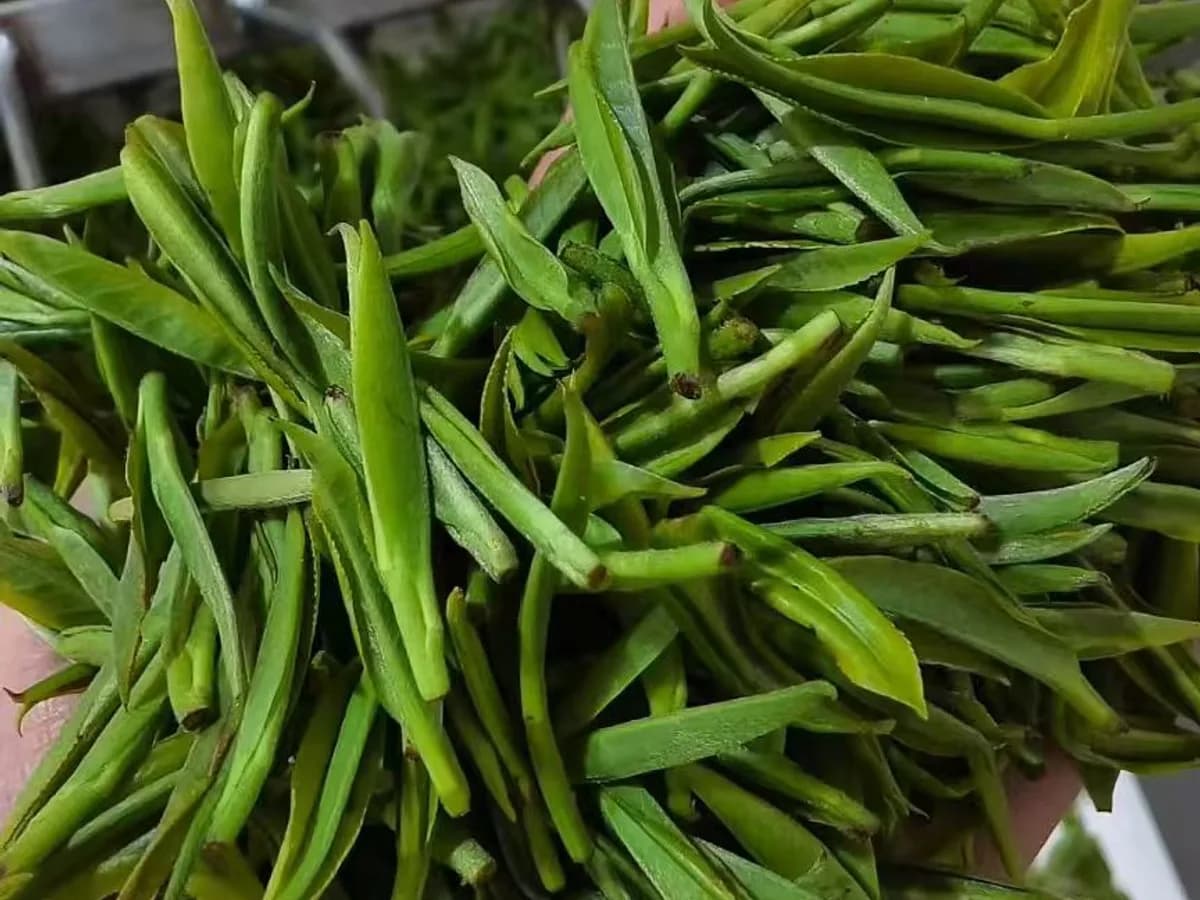
Pre-Qingming green tea — mingqian — is tea plucked before the Qingming solar term, which falls around 5 April. The date functions as a proxy for a set of physical conditions: a long slow winter dormancy, cool spring temperatures, small tender shoots and a low yield per hectare. Those conditions, not the calendar itself, are what you are paying for.
This matters commercially because the proxy can break. A warm early spring pulls the flush forward, and leaf picked on 3 April in a warm year can have grown under conditions closer to a normal mid-April. The date on the specification is still "pre-Qingming", and the price still reflects it.
What actually changes in the leaf
| Pre-Qingming | Between Qingming and Guyu | After Guyu | |
|---|---|---|---|
| Shoot size | Small, tender | Larger | Larger, coarser |
| Yield per hectare | Lowest | Moderate | Highest |
| Amino acid content | Highest | Falling | Lower |
| Polyphenol content | Lower | Rising | Higher |
| Cup character | Sweet, delicate, low astringency | More body, more brisk | Brisk, fuller, more astringent |
| Price | Highest | Moderate | Lowest |
The amino-acid-to-polyphenol relationship is the mechanism behind most of what buyers taste. Cooler temperatures and shorter days favour amino acid accumulation; as the season warms, polyphenols rise. That shift is why later spring tea tastes brisker and why it stands up better to milk, blending or long steeping — and why pre-Qingming tea, brewed carelessly hot, can taste of very little.
When the premium is worth paying
| Your product | Sensible choice | Why |
|---|---|---|
| Single-origin loose leaf, premium retail | Pre-Qingming | The delicacy is the product; the story is checkable |
| Gifting and seasonal editions | Pre-Qingming | Scarcity and date are part of what is being sold |
| Blends and flavoured tea | Post-Qingming | Delicacy is lost behind other ingredients |
| Teabags and foodservice | Post-Qingming | Needs to brew strong and fast, and to cost less |
| Cold brew and RTD | Depends — trial both | Low astringency helps, but extract yield matters more |
| Instant powder and extract | Post-Qingming | Extraction removes most of what you paid for |
The last row is worth stating bluntly, including against our own interest: buying pre-Qingming leaf for extraction is close to burning money. The delicate volatiles that justify the premium do not survive concentration and drying. If a supplier encourages it, ask them to explain the mechanism by which the premium reaches your finished drink.
How to specify and verify a harvest window
"Pre-Qingming" alone is a weak specification because Qingming moves and springs differ. Stronger practice:
- State an explicit date range, not only the solar term — for example "plucked between 20 March and 4 April inclusive".
- Require the picking date to appear on the lot documentation, not just the production date.
- Ask for the plot identifier alongside the date. A date without a place is not traceable.
- Agree what happens in a warm year: does the date hold, or does the specification follow the flush? Decide before the season, not during it.
- Keep a retained sample from the first accepted lot and compare next year's against it.
Practical notes on handling
- Green tea is more perishable than black. Cold storage measurably preserves it; for black tea it is unnecessary.
- Specify a moisture maximum and hold to it. Green tea at high moisture loses its fresh character within months.
- Nitrogen flushing is worth the cost on long transits for premium green grades, and rarely worth it for commercial ones.
- Buy the season, not the year. Green tea does not improve with age, and a "pre-Qingming" lot offered in November is a year older than the one offered in May.
That last point is a live commercial issue. Pre-Qingming tea is produced in a narrow window and sold across the whole year, so what is on offer in autumn is legitimately last spring's crop. That is normal and not deceptive — but the price should reflect it, and the picking date on the documentation lets you check.